Boyneburg, Medieval castle ruin in Sontra, Germany
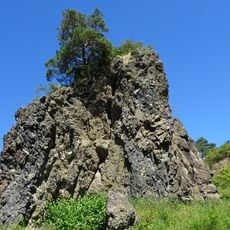
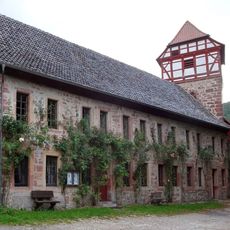
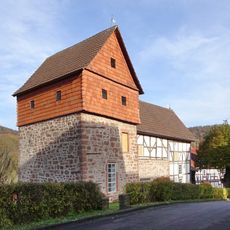
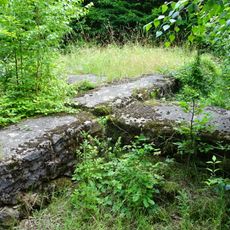
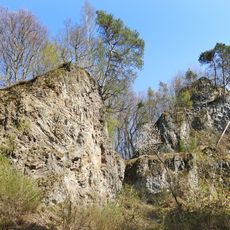
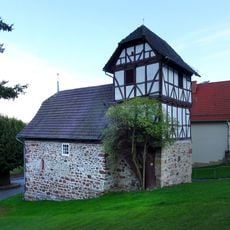
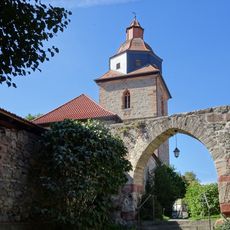
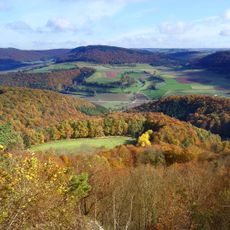
Boyneburg is a ruined hilltop castle on the 513 m limestone hill of the same name, about 2.5 km east-southeast of Wichmannshausen in Sontra. Its core is separated from the outer bailey by a neck ditch; the outer bailey was protected by three still-visible ditches. Two roughly 25 m high walls of the pentagonal keep and some foundation walls remain, built of rubble stone and bossed ashlar. The gatehouse was rebuilt in 1952–53 on its original site.
The Boyneburg was first recorded in 1107 as "Bemelburch", when King Henry V had it destroyed for the raids of its garrison; Count Siegfried III of Northeim received it back as an imperial fief and rebuilt it. Abbot Markward of Fulda had the dilapidated castle repaired between 1150 and 1160. Frederick Barbarossa stayed there in 1156, held a Hoftag in 1166 and a Reichstag in 1188, and set out from the Boyneburg on the Third Crusade in 1189. In 1292 King Adolf enfeoffed Landgrave Henry I of Hesse with Eschwege and the Boyneburg, which led to two centuries of dispute with the imperial ministerials until a settlement in 1449.
The name Boyneburg derives from the Grafen von Northeim, who likely built the first wooden fortifications in the 11th century; the castle appears in documents as Bumeneburc (1123) and Boimeneburch (1137). Each Ascension Day, a bread donation festival (Brotspendefest) is held on the ruins, rooted in the legend of the Fräulein von Boyneburg, who is said to have decreed in her will that the whole community be fed and given gifts on her death day. The service may only be conducted by a pastor from Datterode.
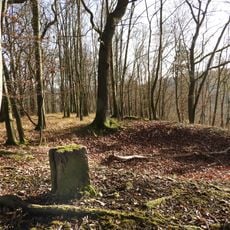
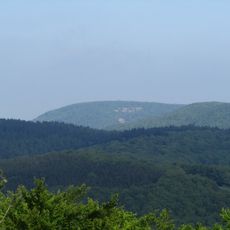
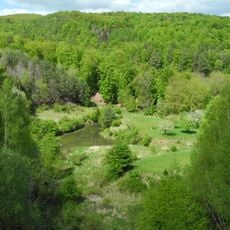
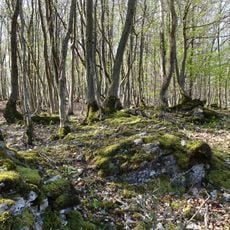
The ruin stands on the wooded Boyneburg hill at about 490 m, reached on foot via hiking trails; the terrain is uneven and the slopes steep. The core castle is separated from the outer bailey by a neck ditch, and three more ditches of the outer defences are still visible. The gatehouse by the keep was rebuilt in 1952–53 on its original site.
Frederick Barbarossa is documented at the castle in 1156, held a Hoftag there in 1166 and a Reichstag in 1188, and endowed income for the castle chapel's priest that same year. In 1189 he set out from the Boyneburg on the Third Crusade, during which he died in 1190.
The community of curious travelers
AroundUs brings together thousands of curated places, local tips, and hidden gems, enriched daily by 94,098 contributors worldwide.