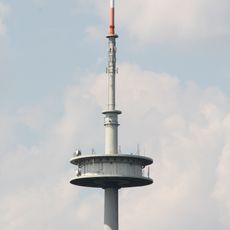
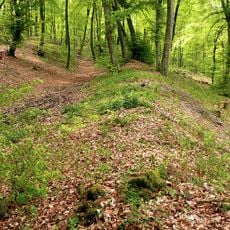
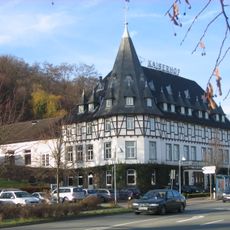
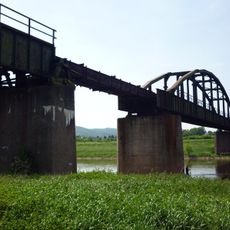
Wittekindsberg, Mountain summit in Minden-Lübbecke District, Germany
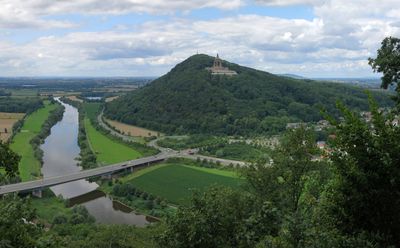
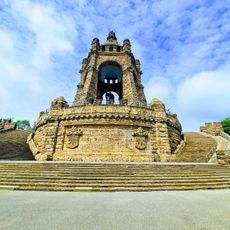
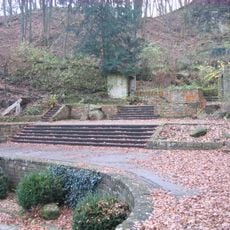
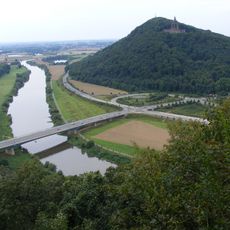
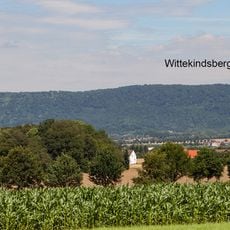
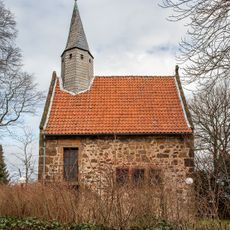
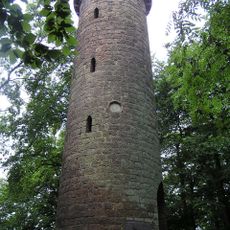
Wittekindsberg is a 281.48 m hill closing the Wiehen Hills to the east and forming the western side of the Porta Westfalica gorge, where the Weser leaves the uplands. On its east slope at about 210 m stands the 1896 Emperor William Monument; the 13.8 m Moltke Tower, built 1828/29 as the Wittekindsstein, rises on the summit. About 450 m west of it lie the walled Wittekind Castle with the Kreuzkirche foundations under a glass shelter and the 12th-century Margarethenkapelle.
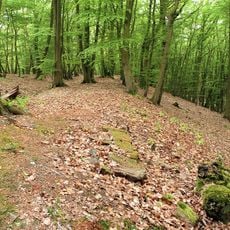
The mountain takes its name from the Saxon leader Wittekind and contains archaeological remains from Iron Age settlements alongside medieval fortifications. These layered traces reveal thousands of years of human occupation at this strategically important location.
The Emperor William Monument built on the eastern slope in 1896 serves as a visible symbol of German unification and local heritage. It remains a landmark that shapes how visitors perceive and remember this mountain.
The hill is covered by a network of walking trails, including the European long-distance path E11, from which the monuments and castle site can be reached. The B 61, B 65 and B 482 roads cross near the hill and connect to the A 2 and A 30 motorways; Porta station on the Weser's east bank links it to the rail network.
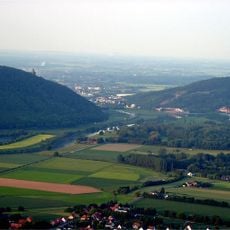
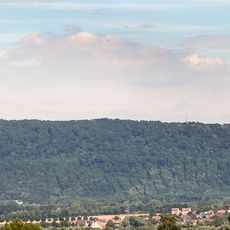
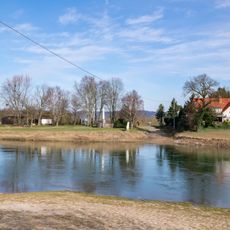
The Wittekindsberg forms the eastern end of the Wiehen Hills and the western edge of the Porta Westfalica gorge, where the Weser leaves the uplands for the North German Plain. The opposite bank is held by the Jakobsberg, the westernmost hill of the Wesergebirge, so the two ranges face each other across the water.
The community of curious travelers
AroundUs brings together thousands of curated places, local tips, and hidden gems, enriched daily by 94,576 contributors worldwide.