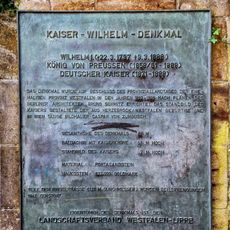
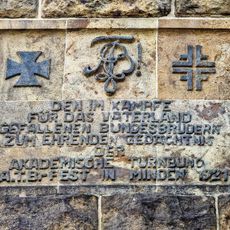
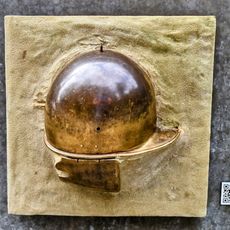
Wittekindsburg, Archaeological castle site in Porta Westfalica, Germany.
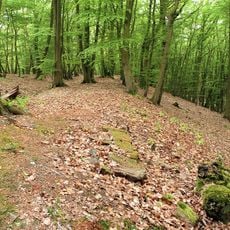
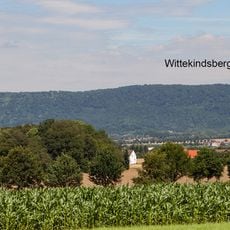
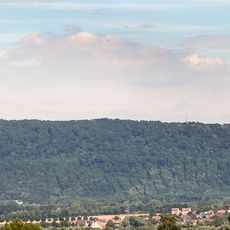
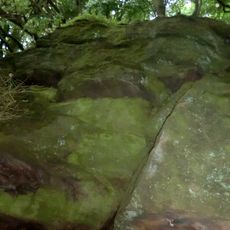
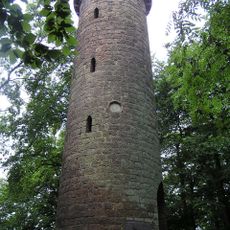
Wittekindsburg is a castle ruin on a ridge of the Wiehengebirge range, between the towns of Minden and Porta Westfalica in North Rhine-Westphalia. The site holds walls and foundations from several different periods, spread across a broad hilltop area.
The rampart was first built in the pre-Roman Iron Age, like the nearby Dehmer Burg and the 25-hectare Nammer Lager, as a refuge fort near the Weser gap at Porta Westfalica. A Saxon-Frankish phase followed; a 993 imperial charter names it Wedegenborck, after Wittekind, Charlemagne's Saxon opponent. In the 10th century a hermitage stood here before Bishop Milo of Minden (in office 969–996) founded a nunnery.
The Margarethen Chapel on the grounds dates from Romanesque times and shows that people used this place for worship across many centuries. Nearby, the foundations of the Kreuzkirche are visible, uncovered during excavations.
The ruin is reached on foot via several hiking trails, including the Wittekindsweg, which offers good views over the surrounding valleys along the way. Sturdy shoes are a good idea, as the ground is uneven and can be slippery in wet weather.
The Wittekindsquelle spring inside the walls dried up in 1938, when iron-ore mining cut the underground water-bearing layers; a mouth of the mine adit still stands as a trace of that mining. The spring's failure is a detail easily missed among the ramparts.
The community of curious travelers
AroundUs brings together thousands of curated places, local tips, and hidden gems, enriched daily by 94,175 contributors worldwide.