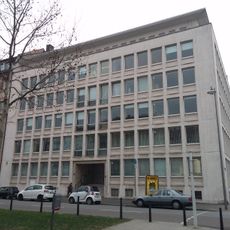
Burg Eichelsheim, Former castle site in Mannheim, Germany
Burg Eichelsheim, also called Veste Mannheim, was a customs castle on the Rhine in what is now Mannheim-Lindenhof. A 1600 description records a moat, a fortified gate with two gate towers, and a water castle with four round towers at its core. No visible remains survive; a rebuilt wall fragment and a memorial plaque near the Stephanienufer mark the site.
The fortress was founded in 1353 and served as a customs station and mint for Electoral Palatinate coinage. It experienced destruction during later conflict and gradually vanished from the city landscape.
The name Eichelsheim refers to the dense oak forest that once grew on the site. The castle also minted the Mannheimer Pfennig, a silver coin of the Electoral Palatinate. Today a section of wall and a memorial plaque at the Rhine bank near the former location recall the castle, and a themed panel on the Lindenhof historical trail lists its chronology.
The location is now accessible only through a commemorative plaque and remaining wall fragments along the Rhine path in the Lindenhof district. Visitors should use the riverside walking routes to place this historical point within the broader geography of the city.
The castle's only standing tower held Antipope John XXIII from summer 1416 to January 1419, imprisoned on the orders of Elector Louis III. There he wrote poems on the transience of earthly things. After the 1462 Battle of Seckenheim, Bishop George of Metz was reportedly confined in the same room.
The community of curious travelers
AroundUs brings together thousands of curated places, local tips, and hidden gems, enriched daily by 94,511 contributors worldwide.