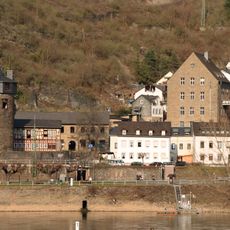
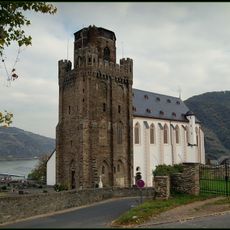
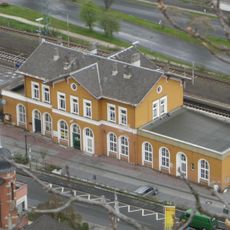
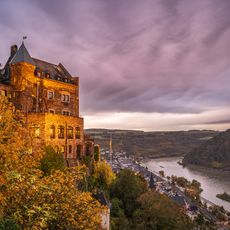
Burg Herzogenstein, Medieval castle in Dörscheid, Germany
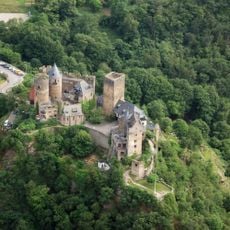
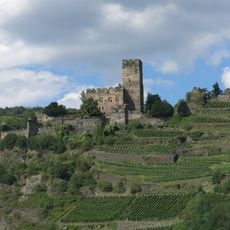
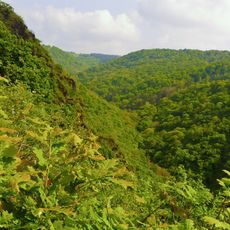
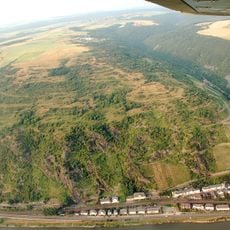
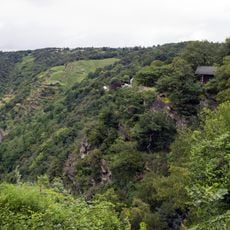
Burg Herzogenstein is a stone fortress located on a hilltop in the Rhein-Lahn region, with views across the surrounding landscape. The structure combines defensive fortifications with living quarters in a compact design positioned at elevation.
Pfalzgraf Ruprecht I planned the castle in 1359 on the Roßstein, a rock above the Urbach valley, to secure the Palatinate's holdings around Kaub. Archbishop Boemund II of Trier backed Oberwesel, which feared losing Rhine traffic to a possible toll post. After a building halt on 6 January 1360 and a year of disputes, Emperor Karl IV persuaded Ruprecht to stop work in autumn 1360; the castle was never completed.
The name Herzogenstein refers to the duke (Herzog) who planned it, while Rheineck points to its position above the Rhine. The unfinished castle never housed a noble family; its only appointed burgrave moved to Burg Kaub in 1362 or 1364. The nearby field name "Alte Burg" still marks the site.
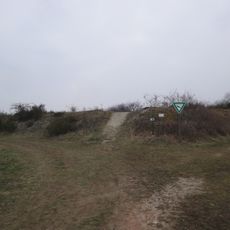
The ruin is freely accessible. It can be reached from Dörscheid via a farm track; the Rheinsteig long-distance trail also passes the site. Only remnants of a tower, an 8–10 m wide building and some walls remain, so watch your step on uneven ground.
The castle was never finished: begun in 1359 by Count Palatine Rupert I, construction halted after Emperor Charles IV intervened in autumn 1360 on behalf of Oberwesel. The following year it was absent from the list of Palatine castles, and the appointed castellan moved to Kaub Castle in 1362 or 1364. Only a tower, a building eight to ten metres wide and some walls remain.
The community of curious travelers
AroundUs brings together thousands of curated places, local tips, and hidden gems, enriched daily by 93,850 contributors worldwide.