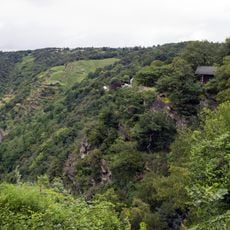
Schwedenschanze, Star-shaped earthwork fortification in Dörscheid, Germany
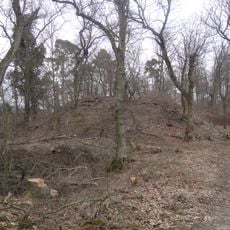
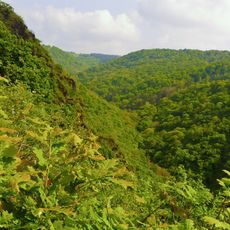
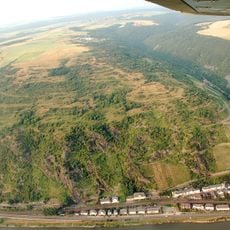
Schwedenschanze is a star-shaped earthwork, probably built in 1631/32 during the Thirty Years' War, lying 750 metres west of Dörscheid on a hill. It is heavily eroded and no longer reads as a star; only at the southwestern tip does the rampart still stand up to two metres high. A ditch about five metres wide once surrounded it but is no longer visible.
The star-shaped earthwork was probably laid out in 1631/32, when the Landgrave of Hesse besieged the Palatine town of Kaub during the Thirty Years' War. It lies 750 metres west of Dörscheid on a hilltop. Karl August von Cohausen described it among the old schanzen of the Wiesbaden district in the Nassauische Annalen of 1879.
The name Schwedenschanze, "Swedish rampart", recalls Swedish troops who fought in the Thirty Years' War, though the star-shaped earthwork was probably thrown up in 1631/32 when the Landgrave of Hesse besieged the Palatine town of Kaub. The site is a protected ground monument, so digging and targeted collecting of finds require a permit and chance finds must be reported to the heritage authorities.
The earthwork lies 750 metres west of Dörscheid on a hilltop; the southwestern tip keeps a bank up to two metres high, while the former five-metre ditch is no longer visible. The whole area is a protected Bodendenkmal, so digging and targeted collecting of finds need a permit, and chance finds must be reported to the monument authority.
The site is a protected ground monument under Rhineland-Palatinate law, so excavations and targeted collecting of finds require a permit, and chance finds must be reported to the heritage authorities. The earthwork was documented by Karl August von Cohausen in the Nassauische Annalen, Vol. 15 (1879).
The community of curious travelers
AroundUs brings together thousands of curated places, local tips, and hidden gems, enriched daily by 93,782 contributors worldwide.