Burg Hohengundelfingen, Medieval castle ruins in Gundelfingen, Germany.
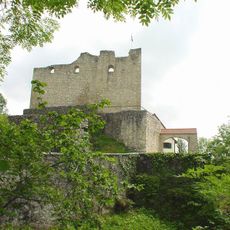
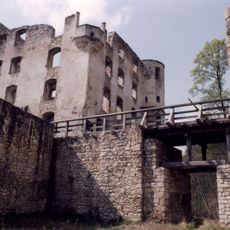
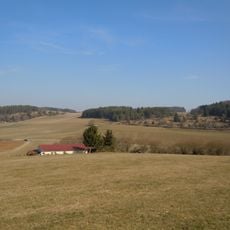
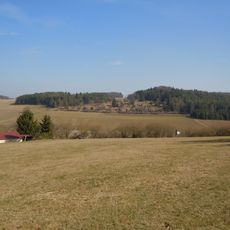
Burg Hohengundelfingen is the ruin of a medieval hilltop castle at 725 m above sea level above the Lautertal valley near Gundelfingen, in the Reutlingen district. Its surviving feature is the stump of a bergfried built of bossed ashlar blocks in the early 13th century, now 12 m high, from which the river valley and the southern and western Alb plateau can be seen.
Burg Hohengundelfingen was the ancestral seat of the free noble family of Gundelfingen, documented since the 12th century; Swigger IV von Gundelfingen (c. 1160–1228) is named as a possible builder. The surviving tower masonry of bossed ashlar dates from the early 13th century, and the castle is first recorded in a charter in 1236. After the Gundelfingen inheritance division of 1250 the family declined, and after 1293 the castle was sold to the Habsburgs. In 1389 it was already called a Burgstall, a ruin, apparently destroyed in the preceding town war between Eberhard the Greiner and the imperial cities.
The castle was the ancestral seat of the free noble family of Gundelfingen, documented since the 12th century. The name Hohengundelfingen distinguishes the hilltop ruin from the village of Gundelfingen below. The family's decline began with the Gundelfingen inheritance division of 1250, after which the castle passed to the Habsburgs and many changing owners.
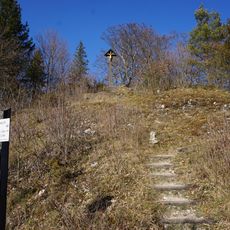
A marked path from the B465 parking area leads to the castle, with the walk taking about 15 minutes and involving minimal elevation gain. The easy access makes the visit possible for visitors of all fitness levels.
The 12-metre bergfried is built of Buckelquader, bossed ashlar stones typical of the early 13th century; the same masonry phase coincides with the Gundelfingen family's peak. From the tower and other viewpoints the whole Lauter valley and the southern and western Alb plateau open up.
The community of curious travelers
AroundUs brings together thousands of curated places, local tips, and hidden gems, enriched daily by 93,970 contributors worldwide.