Bürgerpark, Urban park in western Bielefeld, Germany
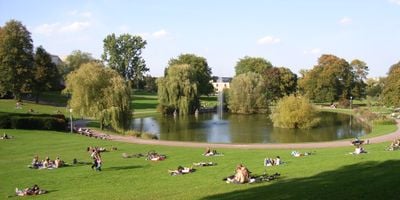
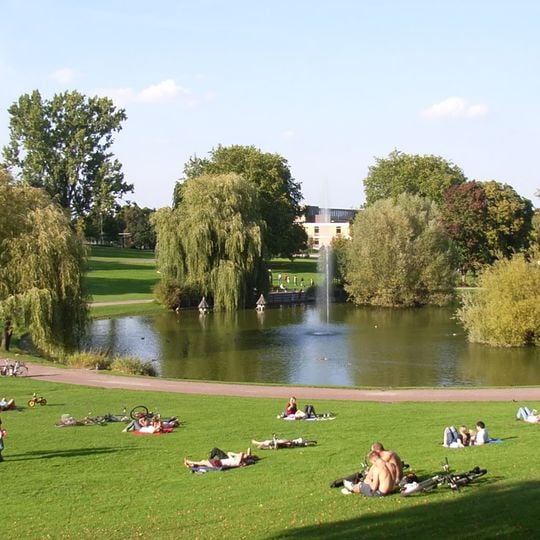
Bürgerpark is a park in western Bielefeld created between 1919 and 1921 from a former clay pit. A pond with a fountain lies at its centre, with a paved path along the near shore and two small conical-roofed structures on the far bank. The grounds hold rhododendrons, a rose garden and a cottage garden.
The park was developed between 1919 and 1921 from a former clay excavation site as an employment initiative during economic hardship. This transformation of abandoned industrial land into public space was part of the city's broader effort to rebuild.
The park's name reflects its role as a public gathering space for the town's citizens throughout its existence. People from the neighborhood continue to use it for walks and to spend time among the gardens and water features.
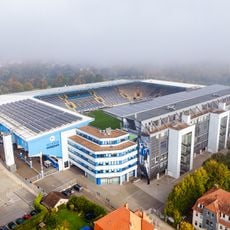
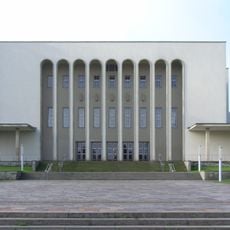
The park lies in western Bielefeld, about 350 metres south of the SchücoArena stadium. The Stadtbahn stop Rudolf-Oetker-Halle, served by line 4, sits immediately west of the grounds. Paths run along the pond and through the gardens; the terrain is level.
Since 1961 a bronze elk has stood in the park, designed by Hamburg sculptor Hans Martin Ruwoldt. It commemorates Gumbinnen, the East Prussian town now Gussew in Russia, and the residents displaced from it after 1945.
The community of curious travelers
AroundUs brings together thousands of curated places, local tips, and hidden gems, enriched daily by 92,647 contributors worldwide.