Dammer Bergsee, Protected lake area in Damme, Germany.
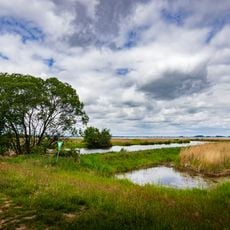
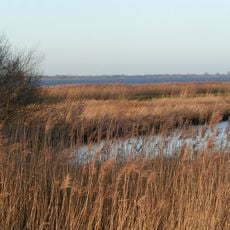
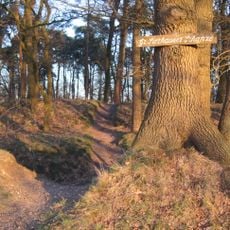
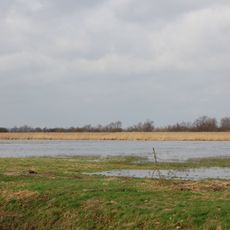
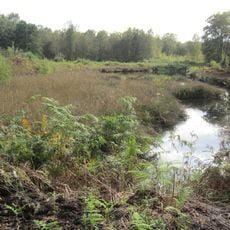
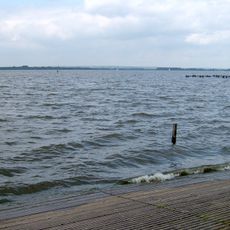
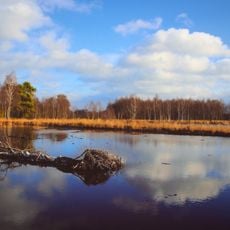
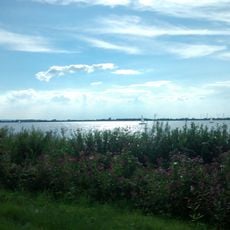
Dammer Bergsee is a protected lake near the town of Damme in Lower Saxony that formed after mining operations. The lake is surrounded by forest and hills and features a circular walking trail with rest areas and viewing platforms.
The lake was created between 1952 and 1967 as the Großer Klärteich, a settling pond for the Damme iron-ore mine, which was abandoned in 1967. From 1974 to 1975 the Vechta district began planting on the site. In 1991 the district planned to remove the clay of the spoil heap for sealing the Tonnenmoor landfill; botanists Paul Olberding and Johannes Wagner and the new Nabu district group campaigned for its protection instead, and on 21 April 1995 it became the Dammer Bergsee nature reserve.
The lake is used as an angling water, stocked over the years with eel, perch, pike, tench, mirror carp, zander and several whitefish species. The name Dammer Bergsee simply refers to the lake in the Dammer Berge ridge, and the protected area also takes its name from it.
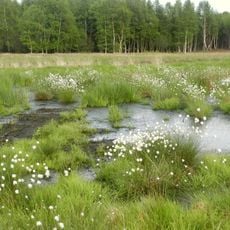
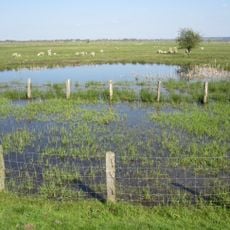
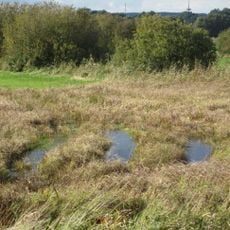
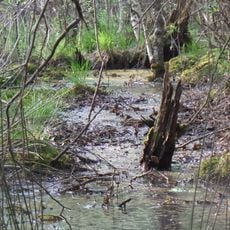
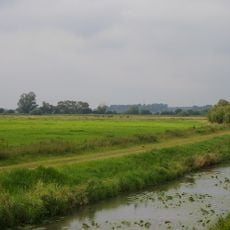
The lake lies about 2 km north of Damme's town centre, in the Dammer Berge ridge. The protected area covers 1.05 km² and holds three artificial water bodies: the Bergsee, the Kleiner Klärteich and the Ziegeleiteich. Water levels can swing strongly with the seasons, and the lake has shrunk further since the dry years of 2018 to 2020.
The lake is not a natural feature: it was dug between 1952 and 1967 as the Großer Klärteich settling pond for the Dammer iron-ore mine, which closed in 1967. The surrounding spoil heap, where birch planting failed before a small birch wood took hold at the north edge from the late 1980s, now supports silver and gold thistles and the branched grass lily.
The community of curious travelers
AroundUs brings together thousands of curated places, local tips, and hidden gems, enriched daily by 93,638 contributors worldwide.