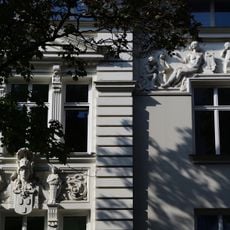
Delphi Filmpalast, Movie theater and cultural heritage monument in Charlottenburg, Germany
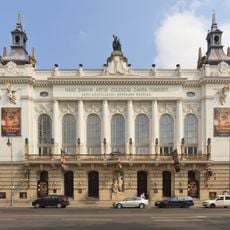
Delphi Filmpalast is a cinema and listed heritage monument on Kantstrasse in the Charlottenburg district of Berlin. The building's facade is styled after a temple, with stone lions and decorative vases on the outside, while inside several auditoriums together seat over 600 people.
The building was erected in 1927/1928 as the Delphi-Palast dance hall, designed by Bernhard Sehring, who also planned the neighbouring Theater des Westens. It replaced the first exhibition building of the Berlin Secession from 1899 on the same corner of Kantstrasse and Fasanenstrasse. Dance orchestras such as Teddy Stauffer's, Heinz Wehner's and Ben Berlin's played here; in 1942 the Belgian Fud Candrix orchestra performed before Wehrmacht soldiers. Damaged in the war and closed in 1943, it was rebuilt from 1947 to 1949 under Walter Jonigkeit and reopened as a cinema.
The building opened in 1927/1928 as the Delphi-Palast dance hall, designed by Bernhard Sehring, who also planned the neighbouring Theater des Westens. Dance orchestras led by Teddy Stauffer, Heinz Wehner and Ben Berlin played here; in 1942 the Belgian Fud Candrix orchestra performed before Wehrmacht soldiers. Since 1952 the house has hosted Berlinale screenings, and in 1981 it held the first Forum des jungen Films.
The cinema sits close to Zoologischer Garten station, which makes it easy to reach by train, subway, or bus from most parts of the city. Parking is available on the surrounding streets for visitors arriving by car.
The Delphi Filmpalast is one of a small number of cinemas in Germany still able to project 70mm film, a format that has disappeared from most venues. Below the cinema, the Quasimodo jazz club has been hosting live concerts for decades, completely separate from the screenings above.
The community of curious travelers
AroundUs brings together thousands of curated places, local tips, and hidden gems, enriched daily by 94,156 contributors worldwide.