Wolfsschluchthöhle, Natural cave in Lenningen, Germany
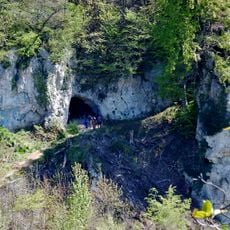
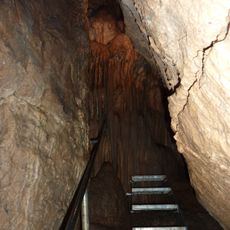
Wolfsschluchthöhle is a small natural cave near Lenningen that opens up over a short distance, displaying three freestanding stalagmites in its main chamber. The walls are covered with calcite crystals, and after the main room a narrow passage leads to a confined opening.
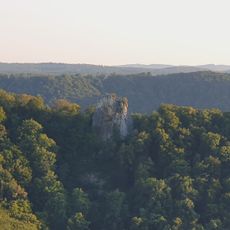
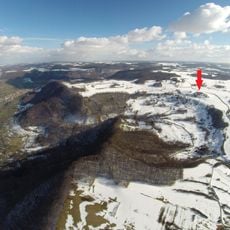
The sources record no archaeological finds or prehistoric use for Wolfsschluchthöhle; its documented history concerns protection, not settlement. It lies in the Wolfsschluchtfelsen above Gutenberg, a district of Lenningen on the Swabian Alb, roughly midway between the two developed show caves, Gutenberger Höhle and Gußmannshöhle. It is registered as a nature reserve and is left unlocked, but entry between October and March is avoided so hibernating bats are not disturbed.
The cave takes its name from the Wolfsschluchtfelsen, the rock face above Gutenberg in which it lies; the sources record no wolf legend behind it. Visitors reach it on foot from the hiking car park between Schopfloch and Krebsstein, and it sits roughly midway between the two developed show caves, the Gutenberger Höhle and the Gußmannshöhle.
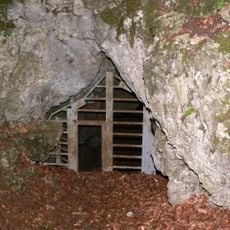
The cave lies midway between the Gutenberger Höhle and the Gußmannshöhle, both developed show caves, and is reached on foot from the hiking car park between Schopfloch and Krebsstein. The entrance is only about 0.8 m high. The cave is not locked, but it must not be entered between October and March because bats hibernate inside.
The cave has a very low entrance less than 1 meter high, but then opens into a chamber where you can stand upright. This surprising change in space makes every visit feel like a small adventure.
The community of curious travelers
AroundUs brings together thousands of curated places, local tips, and hidden gems, enriched daily by 92,800 contributors worldwide.