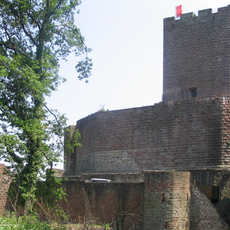
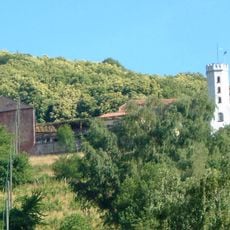
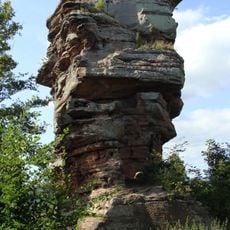
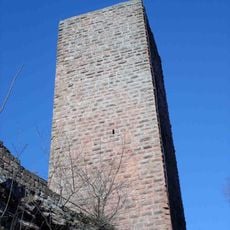
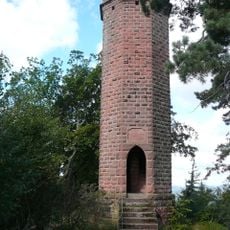
Schlössel, Medieval castle ruins in Klingenmünster, Germany
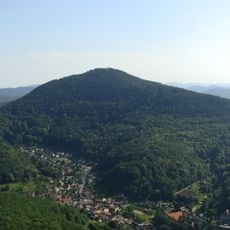
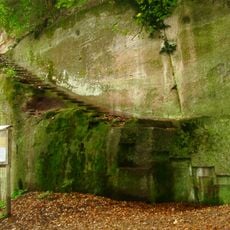
The Schlössel stands on the Treutelsberg above Klingenmünster, a hilltop site built in two phases far apart in time. A large ring wall of 880–920 encloses the later castle, whose core is a tower motte of around 1030 with remains of a mortar area and two buildings. Excavations also uncovered hearths and an ore furnace.
A ringwork was built between 880 and 920 as a refuge against Norman raids. Around 1030 a motte with a residential tower followed, possibly under King Conrad II. After two rebuilds in the late 11th and early 12th century, the castle may have been destroyed in 1168 by order of Frederick Barbarossa.
The name Schlössel only arose after the castle was destroyed; its original name is unknown and no written records of its founders or inhabitants survive. Finds of pottery sherds with yellow, red and green residues, plus a painted green glass shard, hint at non-ferrous metal or glass working in the service yard. A bathhouse and a smithy stood in the later service yard.
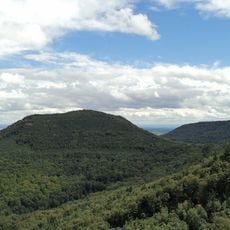
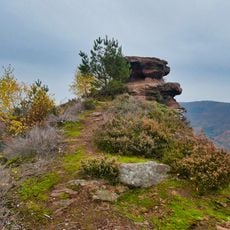
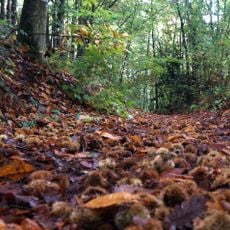
The site is reachable by hiking trails in a forested hilly area. The ruins are exposed to the elements, so sturdy footwear and care on uneven ground are recommended when visiting.
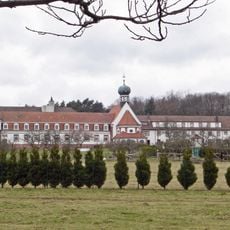
The castle's original name is unknown; "Waldschlössel" was only given after its destruction. Around 2,700 cubic metres of stone had overgrown the ruins before 1855, when stones were removed to build the psychiatric and neurological clinic at Klingenmünster. Christian Mehlis examined the site in 1890, and Friedrich Sprater uncovered the whole core castle in 1935.
The community of curious travelers
AroundUs brings together thousands of curated places, local tips, and hidden gems, enriched daily by 94,566 contributors worldwide.