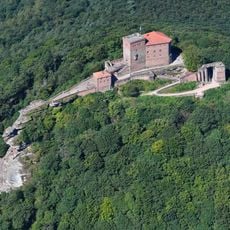
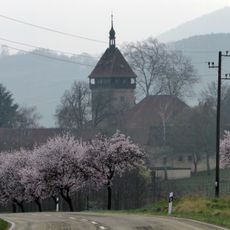
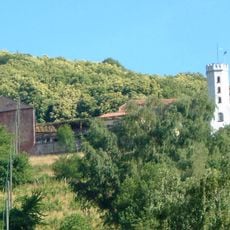
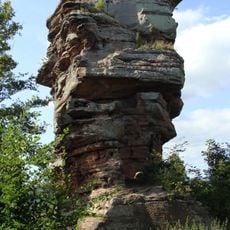
Burg Neukastel, Rock castle in Rhineland-Palatinate, Germany.
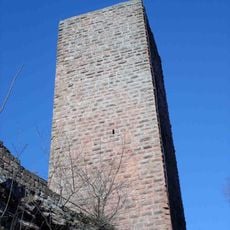
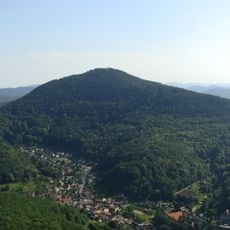
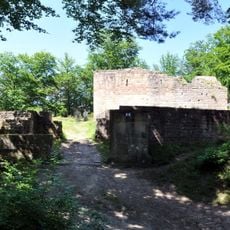
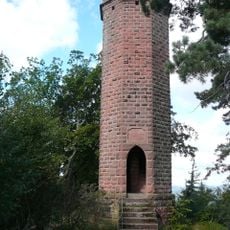
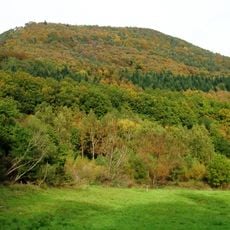
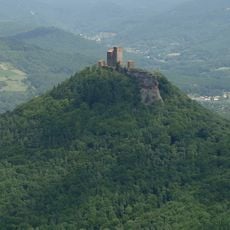
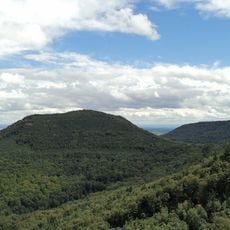
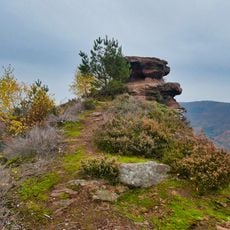
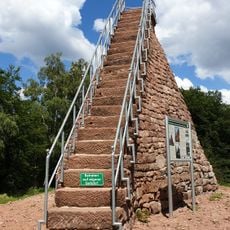
Burg Neukastel is the ruin of a 12th-century hill castle on a sandstone spur of the Föhrlenberg, 459 metres above Leinsweiler. Only a few wall remains survive: an upper bailey with a viewing platform on the rock, and a lower bailey with a rock cave and a neck ditch.
The fortress was built by the Salian dynasty and received its first written record in 1123 in connection with Heinrich von Neukastel. It functioned as an imperial castle alongside Trifels Castle, representing one of the most significant symbols of imperial authority in the region.
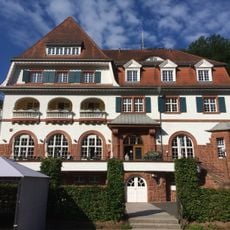
The name Neukastel means 'new castle', pointing to a replacement or addition to an older fortification. In 1252 or 1253, Ludwig von Schüpf, landvogt in the Speyergau since 1232, took his name from the castle. The Slevogthof Neukastel at the foot of the hill, rebuilt in 1828 on the foundations of the castle's former Maierhof, carries the name to this day.
Visiting the fortress requires a moderate hike with steep terrain, especially to reach the upper sections. Sturdy footwear and caution among the rocks are essential, as the location is exposed and can be windy.
The name Neukastel means 'new castle', likely because it replaced or supplemented an older structure. The castle was pledged in 1330 by Emperor Louis the Bavarian, together with many other properties, for 6,000 marks of silver to Counts Palatine Rudolf II and Ruprecht I. At the foot of the hill, the Neukasteler Hof, the castle's former economic yard destroyed in 1689, was rebuilt in 1828; the Slevogthof Neukastel now stands on that site.
The community of curious travelers
AroundUs brings together thousands of curated places, local tips, and hidden gems, enriched daily by 93,850 contributors worldwide.