Lützeler Volkspark, Public park on Petersberg, Koblenz, Germany
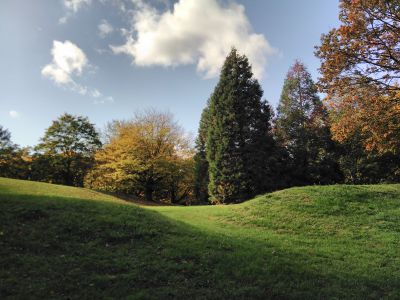
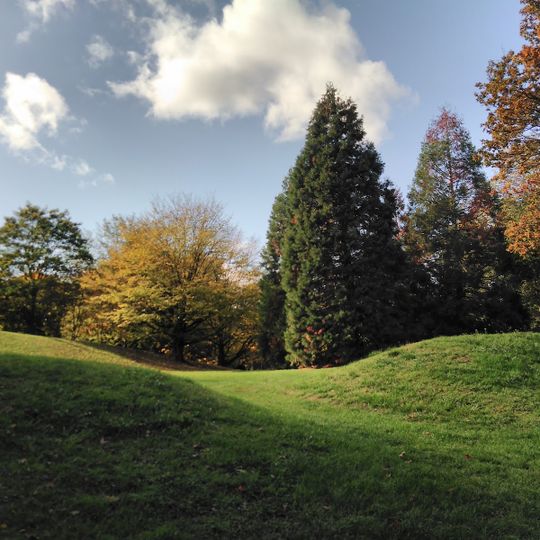
Volkspark Koblenz-Lützel is a 14-hectare green space occupying the northern section of Petersberg, bordered by streets in this city district. The park features maintained walking paths, ornamental shrubs, selected trees, and a water lily pool that structure the grounds.
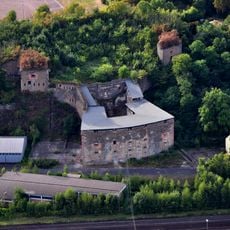
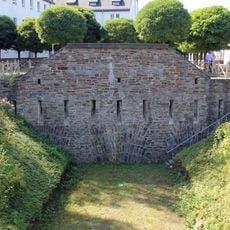
The park was laid out from 1932 on the rubble of the Bubenheimer Flesche, a work of the Feste Franz system decommissioned in the 1920s after World War I. Plans dated back to 1921, but negotiations with the Reich and French occupation delayed the start; the city took over the site on 1 January 1934. Around 1,000 unemployed workers moved 110,000 m³ of earth and reused 11,000 m³ of broken fortress stone. Mayor Wittgen inaugurated the park on 13 June 1936.
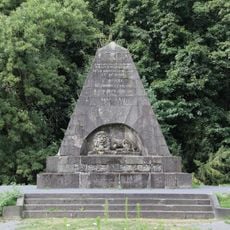
The park's name refers to the Volkspark movement, and its layout follows plans by the Städtisches Gartenamt from the 1930s. A memorial to the war dead of the Lützeler Turnverein was inaugurated on 18 November 1936, probably on the lower grounds. After 1945 the site was used for growing vegetables in 1946.
The park lies on the Petersberg slope above the Lützeler Friedhof, framed by Am Volkspark, Bodelschwinghstraße, Am Petersberg, Andernacher Straße and Am Franzosenfriedhof. The lower section toward the railway was cut off after 1950 for the cemetery, so the green space sits on the upper slope. The terrain was levelled by hand and rail from 1932, but the slope remains; expect gradients rather than flat ground.
The Reduit was demolished in October 1969 after years of vandalism, and its rubble was piled into a hill later used for a summer toboggan run. Whether parts of the building survive under that mound has long been disputed.
The community of curious travelers
AroundUs brings together thousands of curated places, local tips, and hidden gems, enriched daily by 94,130 contributors worldwide.