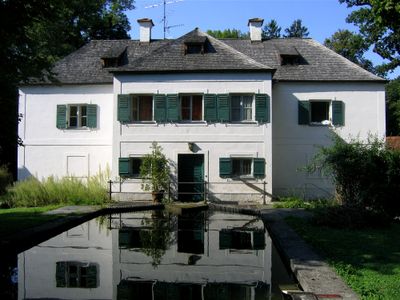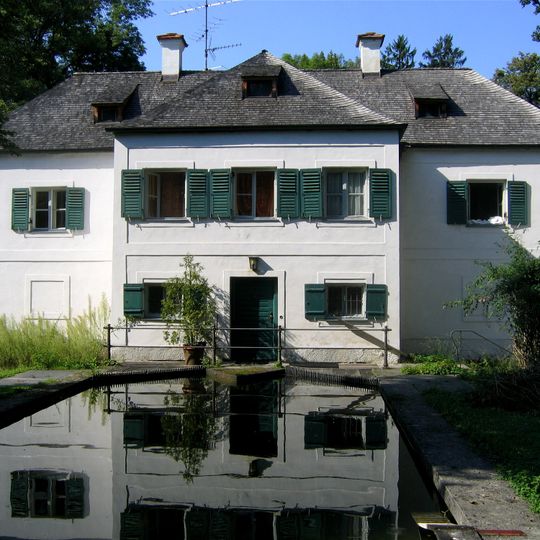
Pumping Stations at the Nymphenburg Palace, Water pumping facility at Nymphenburg Palace, Munich, Germany
The pumping stations at Nymphenburg Palace are historic mechanical installations featuring large water wheels that powered fountains and garden features. These systems were designed to reliably transport water throughout the palace grounds over extended periods.
The Green Pump House was built in 1720 by Joseph Effner for Elector Maximilian II Emanuel to supply water to the Badenburg and nearby fountains. François Poitevin installed a wooden baroque pump there in 1767, raising water to two towers. In 1803 Joseph von Baader replaced it with two water-wheel-driven pumps that still operate; their cast-iron pressure vessel is inscribed with his name and the year MDCCCIII.
The pumping stations show the craftsmanship of Bavarian engineers who distributed water across the entire grounds. Visitors can see how large amounts of water were moved without modern electricity.
The stations are located within the palace grounds and are easiest to reach on foot by following marked pathways. It is advisable to wear sturdy footwear since the grounds are hilly and can be damp in places.
Napoleon was so impressed by the fountain driven by these pumps that in 1805 he summoned Joseph von Baader to Paris to help improve the machine of Marly, the water supply for the Palace of Versailles. The eastern pump house also keeps a manometer signed by Munich court fountain master Franz Höss in 1851, one of the oldest instruments still in use.
The community of curious travelers
AroundUs brings together thousands of curated places, local tips, and hidden gems, enriched daily by 93,679 contributors worldwide.