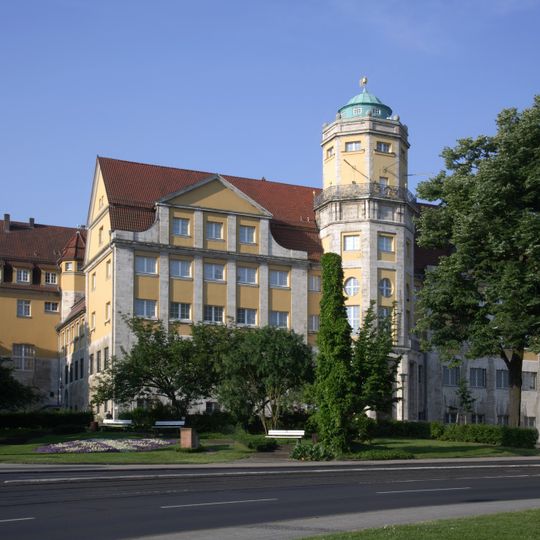
Hessian State Museum, History museum in Kassel, Germany.
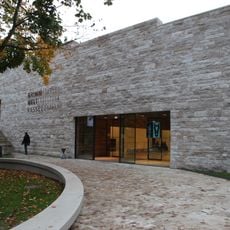
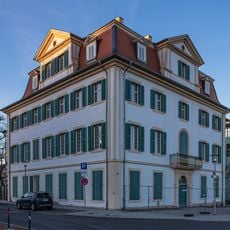
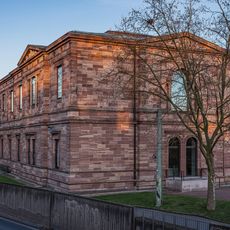
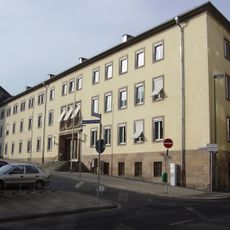
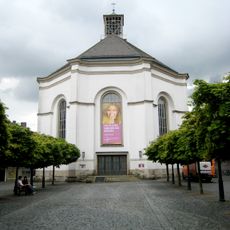
The Hessian State Museum stands at Brüder-Grimm-Platz, designed by architect Theodor Fischer and opened on 23 August 1913 for Kassel's thousandth anniversary. Its historicist design borrows from late-Renaissance Hessian buildings, with a dominant central tower and a five-wing plan around two inner courtyards, following Friedrich Schinkel's museum layout. Three levels covering about 3,800 m² hold over 6,000 objects from prehistory, applied art and folklore.
The museum building was constructed in 1913 to celebrate Kassel's thousandth anniversary. It survived World War II largely intact and was later restored to preserve its collections.
The folklore collection, the largest in Hesse, focuses on traditional costume, pre-industrial work, housing and toys, rooted in 19th-century bourgeois interest in local culture. The applied arts core comes from the Hessian landgraves' collection, once shown in the Fridericianum, and includes medieval sculpture, altars, the silver chamber and porcelain from Meissen, Kassel, Fulda, China and Japan.
The museum is open Tuesday through Sunday with extended hours on Thursdays, and offers full wheelchair access throughout. Visitors should wear comfortable shoes, as there are many stairs and corridors connecting the exhibition spaces.
The German Wallpaper Museum, founded in 1923 on the initiative of the wallpaper dealer Gustav Iven, held around 23,000 objects. It moved into the Hessian State Museum in 1976 and passed to the state of Hesse in 1993; since the 2008 closure its collection is accessible only through an online catalogue.
The community of curious travelers
AroundUs brings together thousands of curated places, local tips, and hidden gems, enriched daily by 94,070 contributors worldwide.