Leichtweißhöhle, Natural cave at Neroberg hill, Wiesbaden, Germany
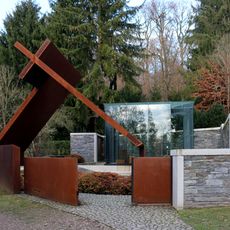
The Leichtweißhöhle is a natural rock overhang, an abri, in the Nerotal valley of Wiesbaden, formed in slate that does not karstify. In 1856 the Verschönerungsverein added a second entrance, a side room and a moss-padded sleeping niche, so the original shape is barely recognizable today.
Heinrich Anton Leichtweiß, a poacher, used this cave as a refuge from 1789 to 1791 until authorities arrested him in 1792. His association with the site became so strong that the cave eventually took his name.
The cave was developed as a tourist destination from 1856 onward, with decorative elements added to attract visitors and enhance the experience. You can still see how the space was designed to welcome travelers during that era.
Access is limited to specific days and times, so it is best to check opening hours before planning your visit. The walk involves climbing uphill to reach the cave, so wear comfortable shoes and be prepared for some physical effort.
The cave is a natural rock overhang, an abri, in slate that cannot form karst; no other caves exist nearby. In 1934 the Gestapo used it as a torture cellar, a fact often overlooked.
The community of curious travelers
AroundUs brings together thousands of curated places, local tips, and hidden gems, enriched daily by 93,626 contributors worldwide.