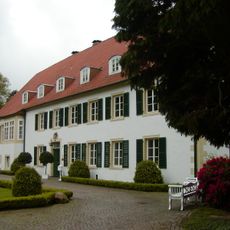
Gut Obernfelde, Manor house in Lübbecke, Germany
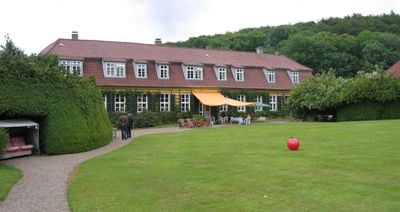
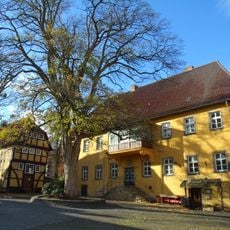
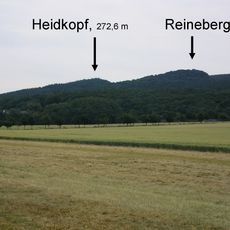
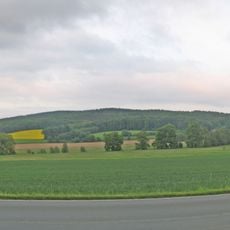
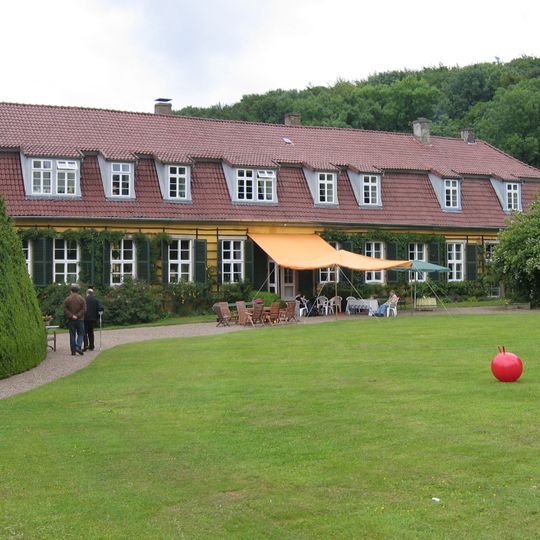
Gut Obernfelde is a manor house in southern Lübbecke organized around a central courtyard with parallel building rows. The main residence and farm structures sit on the northern slope of the Wiehengebirge mountains, forming a closed court complex with old linden trees lining the driveways.
The estate was first mentioned around 1540. In 1730 it passed to the von Korff family, which supplied several district administrators (Landräte) for Minden in the 18th century. After a bankruptcy, Karl von der Recke, son of minister Eberhard Freiherr von der Reck, acquired it in 1818; it remains in his descendants' ownership. The orangery was built in 1828–1829.
The estate was first recorded in 1540 and remains a place where regional owners of historical buildings gather. The association Herrenhäuser und Parks im Mühlenkreis was founded here in 2007 and continues to connect people devoted to preserving old properties.
The grounds are not open to the public, but the exterior architecture of the main building can be observed from outside. The old linden trees along the driveways provide a good sense of the property's historical landscape design.
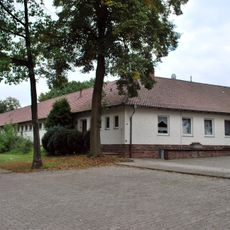
The orangery, built in 1828–1829, was used as a prisoner-of-war camp during World War II. In 1980 it was converted into a residential building. The estate also includes a Ministerhaus designed by Karl Friedrich Schinkel, located east of the courtyard and south of the hospital.
The community of curious travelers
AroundUs brings together thousands of curated places, local tips, and hidden gems, enriched daily by 92,734 contributors worldwide.