Burg Reineberg, Medieval castle ruins on Reineberg hill in Lübbecke, Germany.
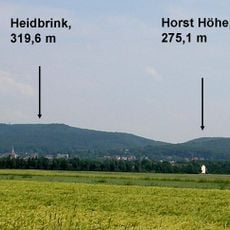
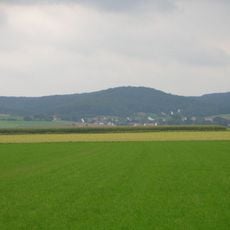
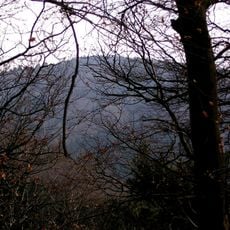
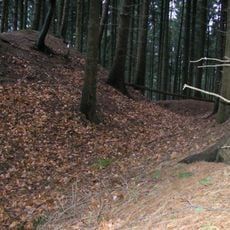
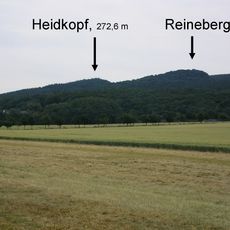
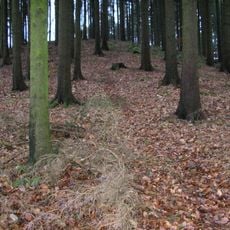
Burg Reineberg, also called Reineburg, is a former hilltop castle on the 275.9-metre Reineberg in the Wiehengebirge, on the southern edge of Lübbecke. Of the fortification, only the castle moat remains visible on the summit, with a total length of 310 metres and a width of 15 to 22 metres. The site also preserves traces of outworks that point to medieval siege techniques.
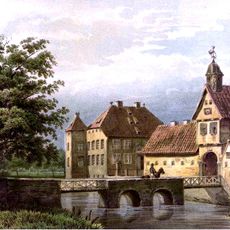
Burg Reineberg was first mentioned in a document in 1221. According to Minden chronicles, Bishop Konrad I of Rüdenberg (1209–1237) founded it, while Osnabrück sources name Bishop Adolf of Tecklenburg (1216–1224) as co-builder. A 1306 treaty placed it in joint ownership of the prince-bishoprics of Minden and Osnabrück. In 1723 King Frederick William I of Prussia ordered its demolition due to dilapidation; usable stone went to government buildings in Minden and the new Amt Reineberg house.
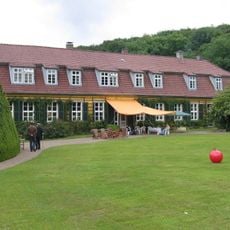
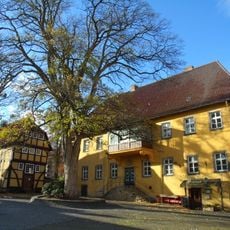
The name Reineberg also appears in the arms of Hüllhorst municipality south of the Wiehen ridge, which shows a picture of the Reineburg; a village district there is still called Reineberg (Ahlsen-Reineberg). The castle gave its name to the Minden office of Reineberg, which existed from 1723 to 1807.
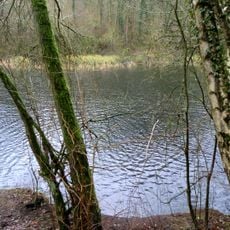
The castle site is accessible via a walking path from the southern edge of Lübbecke and offers easy access for visitors of all fitness levels. Sturdy footwear is recommended as the path crosses natural terrain and occasionally wet areas.
The castle's fortifications included five outer baileys (Vorburgen), a detail established by local researcher Friedrich Langewiesche and confirmed by an official survey of the visible remains in 1951. The main rampart and ditch enclose a plateau whose ditch runs 310 metres long and 15 to 22 metres wide.
The community of curious travelers
AroundUs brings together thousands of curated places, local tips, and hidden gems, enriched daily by 92,619 contributors worldwide.