Gut Schede, Architectural heritage monument in Herdecke, Germany.
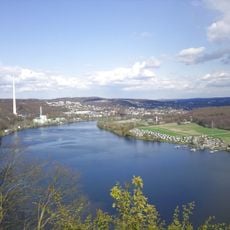
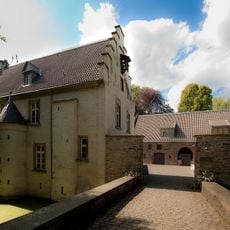
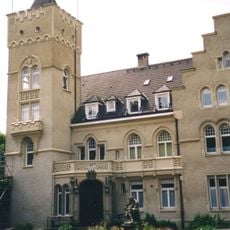
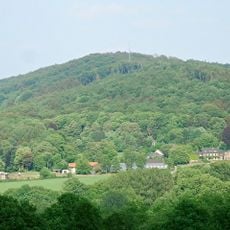
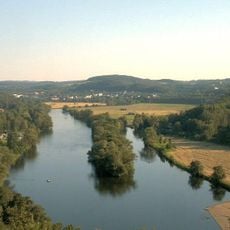
Gut Schede, also called Haus Schede, is an aristocratic seat and working farm on a hill of the Ardeygebirge above the Ruhr in Herdecke. Its oldest surviving building is a farmhouse from the 17th century; the manor house was built in 1810 from Ruhr sandstone, and the large barn dates from 1805.
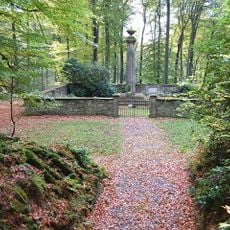
The estate dates back to the 9th century; its oldest surviving building is a farmhouse from the 17th century, where the judge Reinermann zu Wetter lived from 1640. From 1748 the family of industrialist Peter Harkort lived here and helped start iron and steel production in the Ruhr with a raw-steel hammer in nearby Wetter. The manor house was built in 1810 from Ruhr sandstone, and Friedrich Harkort, who died in 1880, was buried in the Harkort family grave in the estate's woods.
The estate reflects the identity of the Harkort family, who shaped its character through generations of residence and work. It represents how rural properties became intertwined with the region's industrial growth.
Gut Schede lies on a hill of the Ardeygebirge above the Ruhr and is private Harkort family property, reachable only on foot; there is no parking or vehicle access to the grounds. The manor house, the 1805 main barn and the Jugendstil interiors are not open to visitors, and the privately used Art Nouveau rooms are opened to the public only very rarely. Walks on the surrounding paths and the avenue with its recent sculptures are possible, but the courtyard and buildings should be left alone.
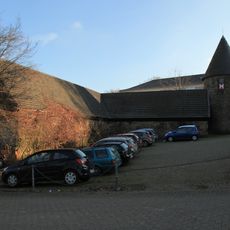
The main barn, built in 1805, has a nearly unique self-supporting roof; it was erected as a test for the manor house's roof of the same design. Between 1995 and 2015 the Harkort family held three-day art exhibitions and concerts in this barn once a year.
The community of curious travelers
AroundUs brings together thousands of curated places, local tips, and hidden gems, enriched daily by 93,755 contributors worldwide.