Lagerhaus Gutehoffnungshütte, Oberhausen, Industrial heritage warehouse in Oberhausen, Germany
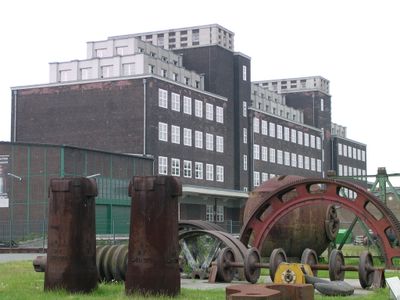
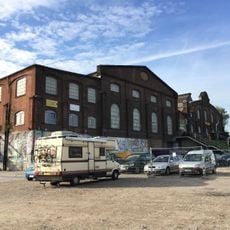
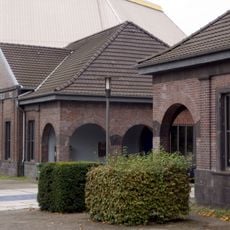
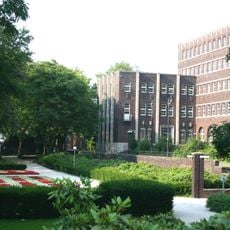
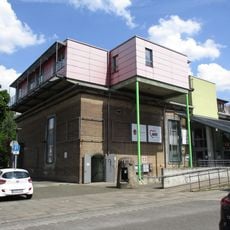
Lagerhaus Gutehoffnungshütte is a large brick warehouse with white concrete trim and two prominent stair towers that divide its outer wall into distinct sections. Inside, the building contains six floors with loading platforms designed to connect with freight trains on both sides.
The warehouse was built between 1921 and 1925 by architect Peter Behrens for the Gutehoffnungshütte company during a period of industrial modernization. This project reflected broader changes happening in the steel and coal industry across the Ruhr region at that time.
The building is now the Peter-Behrens-Bau, the central depot of the LVR-Industriemuseum, which holds exhibitions and guided depot tours there. It is a stop on the Route der Industriekultur. The name honours architect Peter Behrens, whose 1920 competition entry won mainly for its aesthetic qualities, though he had to adapt it to the company's functional requirements.
The Peter-Behrens-Bau is the central depot of the LVR-Industriemuseum and can be visited on guided depot tours; exhibitions are also held in the building. It stands on Essener Straße and is a stop on the Route der Industriekultur. The exterior, with its brick facade and stepped upper storeys, is visible from the street at any time.
The warehouse rests on an exceptionally thick concrete foundation with special expansion joints designed to protect it from damage caused by nearby coal mining operations. This reinforced foundation demonstrates how engineers adapted the building to the unstable ground conditions of the coal-rich Ruhr region.
The community of curious travelers
AroundUs brings together thousands of curated places, local tips, and hidden gems, enriched daily by 94,650 contributors worldwide.