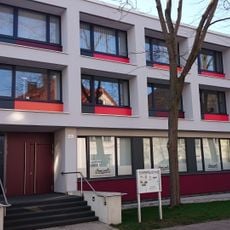
Historisches Museum Bielefeld, History and automobile museum in Bielefeld, Germany
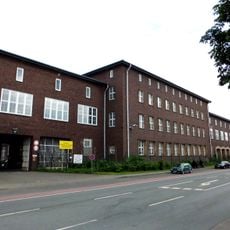
The Historisches Museum Bielefeld occupies several buildings of the former Ravensberger Spinnerei, a spinning mill between Bleichstraße and Heeperstraße. Its displays trace Bielefeld's growth from the 13th century, focusing on linen production, sewing machines, bicycles, and machine and automobile construction. Curators arranged sightlines between sections to show how local industries connected.
The museum opened in May 1994 in disused halls of the Ravensberger Spinnerei. Its displays grew out of regional history collections begun in the 19th century on the initiative of the Historischer Verein für die Grafschaft Ravensberg. In 1995 it became the first European museum to receive the Dibner Award, given by the Society for the History of Technology, for its presentation of power and steam engines.
The collection displays machinery from the city's major industries, particularly sewing machines and bicycles, showing how people worked in earlier times. These objects tell the story of the craftsmanship and traditions that shaped Bielefeld for many decades.
The museum occupies several separate buildings of the former Ravensberger Spinnerei, standing between Bleichstraße to the north and Heeperstraße to the south, at Ravensberger Park 2. The adult education centre borders the site to the west, while the Historischer Garten and Museum Huelsmann lie to the north-east. The site is wheelchair accessible.
A street-cleaning machine from 1934 in the collection was recognized as Monument of the Month in Westphalia-Lippe during November 1999. This unassuming vehicle demonstrates how everyday innovations in city management gained historical importance.
The community of curious travelers
AroundUs brings together thousands of curated places, local tips, and hidden gems, enriched daily by 93,647 contributors worldwide.