Wallfahrtskirche Witterschnee, Catholic pilgrimage church in Löffingen, Germany
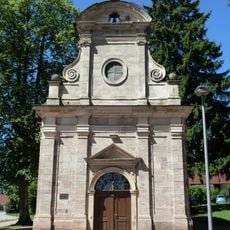
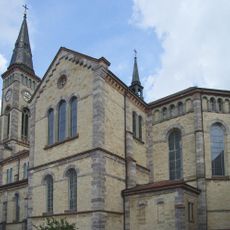
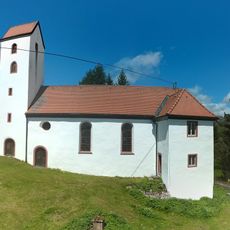
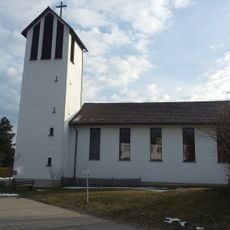
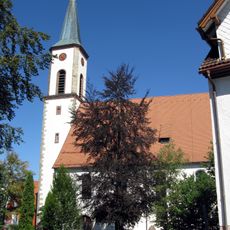
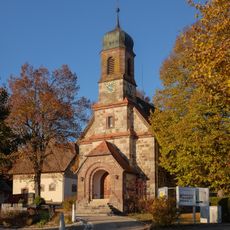
The Wallfahrtskirche Witterschnee sits west of Löffingen and displays neo-Romanesque design with a gable roof tower that houses two bronze bells. The building is a single-nave church with clean lines and features typical of late 19th-century construction.
A pilgrim caught in a snowstorm in the winter of 1735 or 1740 vowed to erect a cross where he was saved; the field cross is attributed to sculptor Jakob Rappenegger (1683–1743). An open shelter with six prayer benches followed in 1792, a wooden chapel in 1846/47, and the neo-Romanesque stone church, designed by Max Meckel, was begun on 15 July 1894 and completed in 1896.
The chapel's patronal feast is Kreuzerhöhung (Exaltation of the Cross) on 14 September. Each year on the first Sunday in May, the Catholic parish community of Donaueschingen makes a pilgrimage to the Witterschneekreuz on foot, by bicycle or by train. The wooden chapel holds numerous votive offerings and votive pictures left by pilgrims.
The site lies on a hilltop west of Löffingen, with the wooden chapel and the stone church standing side by side. The church holds 280 seats. The Catholic parish community of Donaueschingen makes a pilgrimage here each year on the first Sunday in May, on foot, by bicycle or by train.
The wooden chapel dates from 1846/47, not 1849, and was moved on wooden rollers to its present spot before the stone church was built. Inside it are numerous votive gifts and votive pictures left by pilgrims. The two bells in the church tower differ: one cast in 1853 by B. Grüninger in Villingen, the other in 1981 by the Heidelberg bell foundry.
The community of curious travelers
AroundUs brings together thousands of curated places, local tips, and hidden gems, enriched daily by 94,898 contributors worldwide.