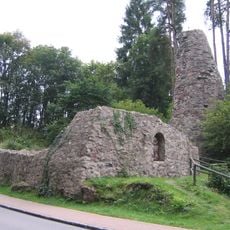
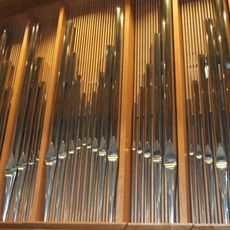
Kloster Friedenweiler, Benedictine and Cistercian monastery in Friedenweiler, Germany.
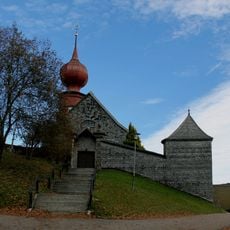
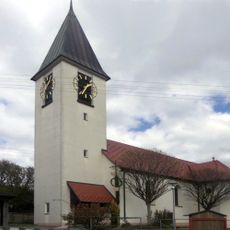
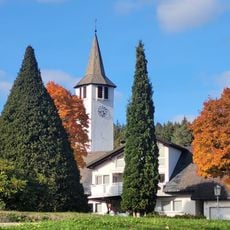
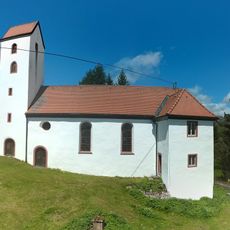
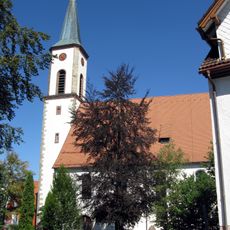
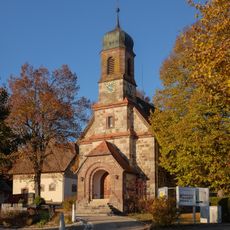
Kloster Friedenweiler is a former women's monastery on the Baar, founded after 1123 and dissolved in 1802/08. Its church, St. Johannes Baptist, built in the 16th century, was refitted in Baroque style by Peter Thumb after a fire on 27 March 1725. An octagonal wooden turret sits centrally on the roof ridge above the entrance gable, holding three bronze bells in a steel frame.
The women's monastery was established after 1123, when St. Georgen Abbey acquired Friedenweiler in a land exchange with Reichenau, and before 1139, when a papal document of Innocent II first mentions the cell. It was a Benedictine priory under St. Georgen's abbot, led by a magistra. In 1570, at the request of Count Heinrich VII of Fürstenberg, Cistercian nuns from Lichtenthal moved into the vacant buildings. The monastery was dissolved in 1802 and passed to the Fürstenberg family.
The high altar painting shows Mary's ascension and draws the eye of visitors during occasional services open to the public. This artwork reflects the spiritual beliefs that guided monastic life within these walls.
The site now functions as a retirement and nursing home and is not freely accessible to the public, though the church opens for special services and occasions. Check locally before visiting to confirm whether you can enter the church at that time.
The monastery was closely tied to medieval land clearing in the southeastern Black Forest, and the nuns, not monks, carried out this work. A papal privilege of Innocent II from before 14 April 1139 first mentions the cell of Friedenweiler as subordinate to St. Georgen.
The community of curious travelers
AroundUs brings together thousands of curated places, local tips, and hidden gems, enriched daily by 94,044 contributors worldwide.