Hof Iben, Medieval castle in Fürfeld, Germany
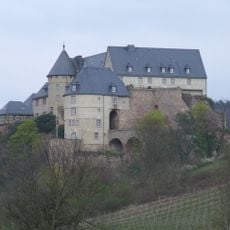
Hof Iben is a water castle in the Appelbach valley that retains original stone walls and fortified structures surrounded by farm buildings. The complex includes a Gothic-style chapel and several massive stone houses that once formed the residential quarters and grain storage areas.
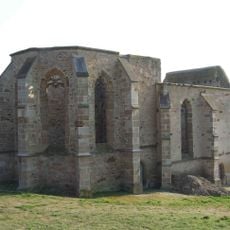
Iben is first documented in 1258 as a Templar commandery, but the surviving Gothic choir of the chapel was built around 1240, and two Romanesque capitals from the demolished nave point to a foundation between 1180 and 1220. After the order was dissolved, the castle passed to the Raugrafen von Altenbaumburg in 1312 and to the Marschälle von Waldeck in 1362. In 1795 the robber Johannes Bückler, known as Schinderhannes, stole food from a French supply wagon here and was freed by an Austrian hussar picket.
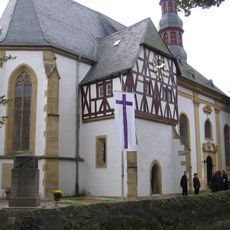
The chapel's 5/8 choir, built around 1240, has a ribbed vault, an octagonal roof turret with a stone spire and window tracery attributed to the Naumburg cathedral workshop, which also worked on the west rood screen of Mainz Cathedral. The farm buildings around it show that the site long served agriculture.
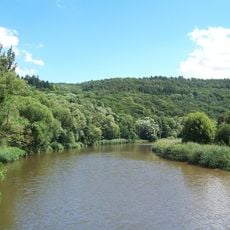
The farm buildings and surrounding land are privately owned and not open to visitors; only the chapel choir, owned by the state of Rhineland-Palatinate since 1870, can be viewed from the outside. The site lies in the Appelbach valley near Fürfeld, and the former moat was fed by damming the Appelbach below Tiefenthal and by the upper ditch of the neighbouring watermill.
The name Iben recalls Ibelin (Latin Ibenium), the crusader castle Saladin took in 1187 and destroyed in 1191. Templars driven from Palestine after the Third Crusade are thought to have founded the site and named it after their former base. The surviving chapel choir, built around 1240, is attributed to the Naumburg cathedral workshop, which also worked on the west rood screen of Mainz Cathedral.
The community of curious travelers
AroundUs brings together thousands of curated places, local tips, and hidden gems, enriched daily by 94,227 contributors worldwide.