Hohenseelbachs-Kopf, Natural monument and hill in Siegerland region, Germany
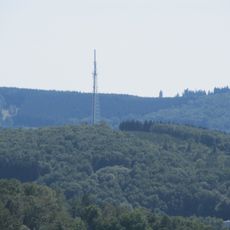
Hohenseelbachskopf is a natural monument and hill in the Siegerland region standing at about 518 meters, composed of basalt and located at the border between two German states. Its distinctive dome shape rises noticeably above the surrounding countryside, making it easy to spot from a distance.
A castle was built on the basalt summit in 1350 but was destroyed just two years later by the Archbishop of Trier. The swift destruction suggests that the structure was seen as a threat to the regional authority of the time.
The hill holds remains of an Iron Age fortification that visitors can still see today as earthen walls and depressions in the landscape. These traces show that the area was home to early communities who valued this location for its elevated position.
Several forest trails lead to the summit from surrounding villages like Altenseelbach, Herdorf, Daaden, and Struthütten, though each route requires a moderate climb. The paths are natural and can become slippery in wet conditions, so appropriate footwear is important.
The basalt rock formed roughly 19 to 20 million years ago through volcanic activity and was later exposed by erosion. This geological history reveals that the region experienced intense volcanic processes during that distant period, shaping the landscape we see today.
The community of curious travelers
AroundUs brings together thousands of curated places, local tips, and hidden gems, enriched daily by 90,856 contributors worldwide.