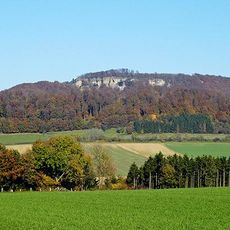
Hohenstein, Mountain summit in Lower Saxony, Germany
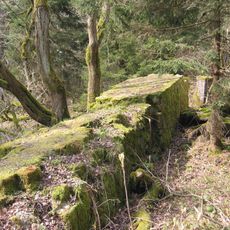
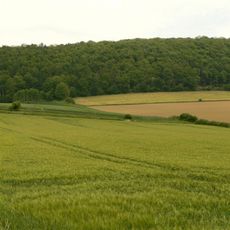
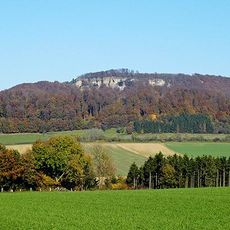
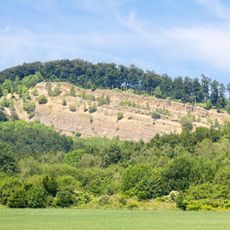
Hohenstein is a 340.5 m high mountain in the Weserbergland, in the Süntel range within the Weserbergland Schaumburg-Hameln Nature Park. Its summit lies on the territory of Hessisch Oldendorf, 2.7 km northeast of Zersen. The mountain has a plateau that drops steeply about 40 m on its southern edge; the cliffs are made of coral oolite and are visible from the Upper Weser valley. Named rock faces include Eibenwand, Grüner Altar, Hirschsprung, Kreuzstein and Teufelskanzel.
The Hohenstein lies in the Süntel ridge within the Weserbergland Schaumburg-Hameln nature park. Its 877-hectare surroundings were designated a nature reserve in 1952, and the Süntel landscape protection area followed in 1968. Since the late 1960s climbing has been regulated: a ban was imposed for conservation reasons, then lifted with restrictions, and some rocks remain closed year-round.
Climbers call the rock faces by their own names: Eibenwand, Grüner Altar, Hirschsprung, Kreuzstein and Teufelskanzel. A climbing ban imposed at the end of the 1960s for conservation reasons was later lifted with restrictions, and some rocks remain closed to climbing all year.
Many routes are partially closed from fall through spring to protect bats during their winter rest period. Visitors should check which areas are accessible before going and be prepared for changing weather conditions on the exposed rock face.
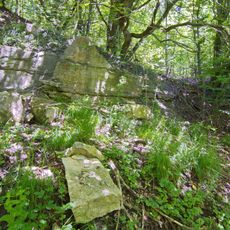
The cliffs are made of Korallenoolith, a fossil-rich limestone visible from the Upper Weser valley. Named rock faces include Eibenwand, Grüner Altar, Hirschsprung, Kreuzstein and Teufelskanzel. Climbing was banned from the late 1960s for conservation, then allowed again with restrictions; some rocks stay closed all year and others from 1 October to 15 March for bat protection.
The community of curious travelers
AroundUs brings together thousands of curated places, local tips, and hidden gems, enriched daily by 94,630 contributors worldwide.