Hoher Ochsenkopf, Mountain summit in Northern Black Forest, Germany
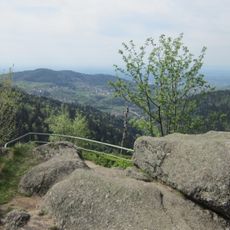
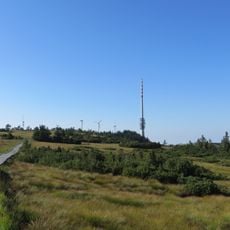
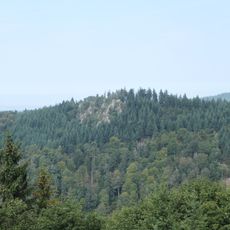
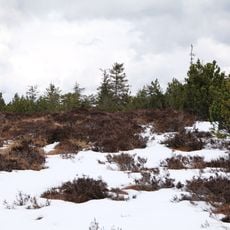
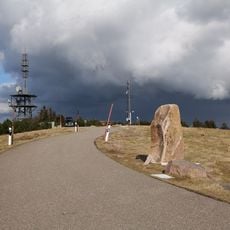
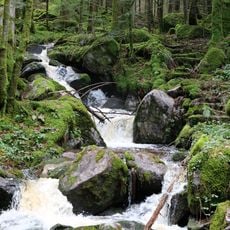
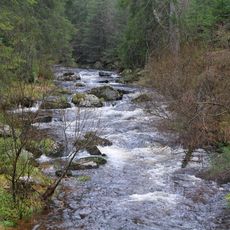
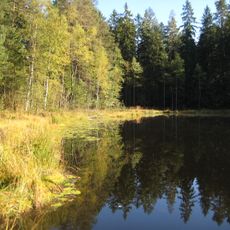
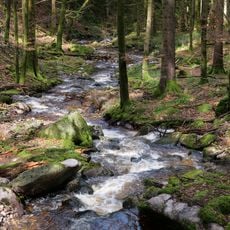
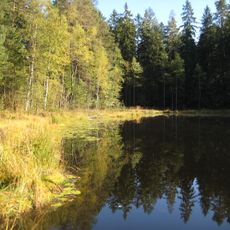
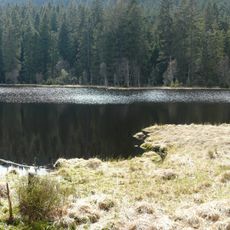
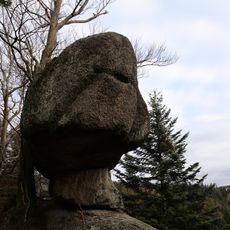
Hoher Ochsenkopf is a mountain summit in the Northern Black Forest region of Baden-Württemberg with a distinctive dome-shaped peak. The mountain rises to roughly 1054 meters above sea level and combines mixed forests with open slope areas.
In 1970 a 41.1-hectare Bannwald was designated on the summit, and in 1975 it became a nature reserve. In 1986 a 600-hectare bird reserve was added to protect the capercaillie, and in 2000 the Bannwald grew to 100.7 hectares, flanked by the 427-hectare Nägeliskopf Schonwald. In 2014 the reserve and Bannwald were absorbed into the Black Forest National Park.
The name Hoher Ochsenkopf means "High Oxen Peak", recalling the flat, once-deforested summit that was grazed as wood pasture in past centuries. Grazing ended and the forest recolonised the kuppe, so no open meadows remain today; the name preserves the earlier use.
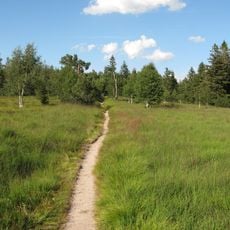
The summit is reached on foot from Hundseck on the Schwarzwaldhochstraße over a roughly three-kilometre ridgeway, or by a steep climb from Herrenwies or Hundsbach-Aschenplatz/Brücke along the Kirchweg. The path starts at the eastern Dreikohlplatten, marked by blue-and-white wooden posts, then continues unmarked and steep to the top. The summit path and the Beckerweg around the mountain are closed from December to May to protect the capercaillie.
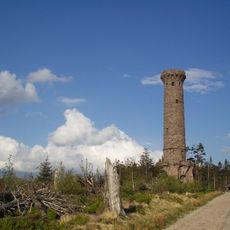
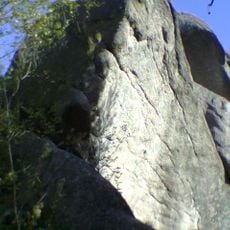
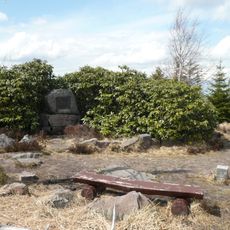
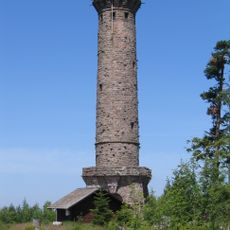
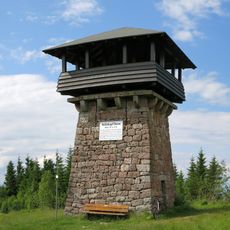
The Teufelskamin is not on the summit but below it, on the path descending toward the saddle: an open fault in the Bunter sandstone that appears as a 20-metre-deep cave. The summit itself still holds the rubble of a stone observation tower, built in 1927 to replace a wooden tower of 1902 and blown up by the Technisches Hilfswerk after a lightning strike in 1971.
The community of curious travelers
AroundUs brings together thousands of curated places, local tips, and hidden gems, enriched daily by 93,849 contributors worldwide.