Küchengarten, Park in Gera, Germany
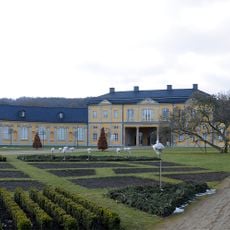
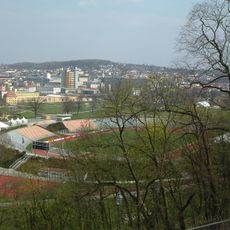
Küchengarten is a park in Gera featuring two distinct design styles across its layout. The western section displays baroque landscaping with geometric patterns, while the eastern area incorporates English garden design principles.
The garden was first mentioned in 1631, already in connection with a summer house, and was laid out near the Hausmühle southwest of today's Orangerie because the kitchen garden at Osterstein Castle, residence of the Lords of Gera of the House of Reuß, no longer sufficed. From the start it was both a fruit and vegetable garden and a representative baroque garden. The Orangerie followed on its west side in 1729–1732.
The park reclaimed its original name after carrying different designations throughout the 20th century. Today it serves as a public garden where visitors can experience how a private estate garden became a shared community space.
The park is open daily with adjusted hours based on the season, offering shorter access times during winter and extended hours from spring through autumn. Plan your visit according to the time of year for the best experience.
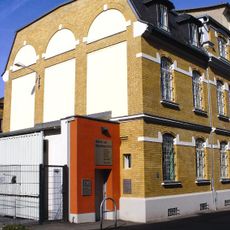
The Orangerie on the garden's west side, built 1729 to 1732, later housed the Museum for the History of the Revolutionary Workers' Movement of the Gera district from 1957 to 1963. The garden's north edge once held a small nature theatre for the counts' household, and after 1954 a colonnade with an oversized Stalin bust stood there.
The community of curious travelers
AroundUs brings together thousands of curated places, local tips, and hidden gems, enriched daily by 94,460 contributors worldwide.