Trippstadt House, Cultural heritage château in Trippstadt, Germany
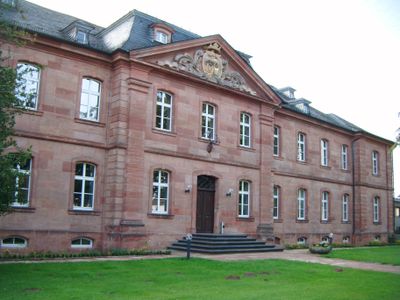
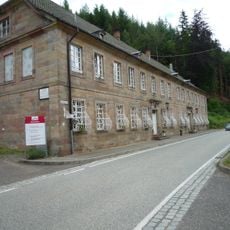
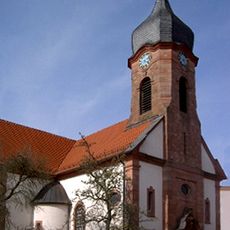
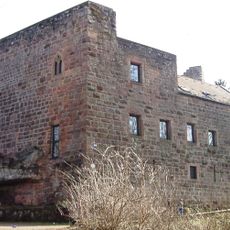
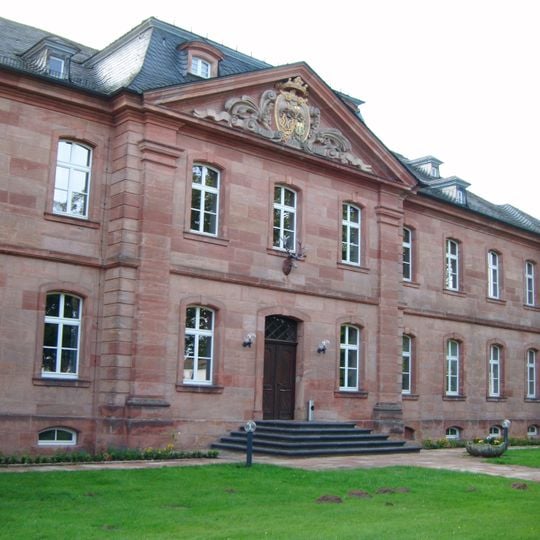
Trippstadt House is a manor built from red sandstone with two main floors, spanning significant dimensions in its design. The structure displays the solid construction typical of noble dwellings from past centuries, still standing today.
The building suffered severe damage when French Revolutionary forces attacked in 1794, destroying much of its structure. Only the cellar vaults remained intact and usable after this destructive episode, becoming the foundation for later restoration.
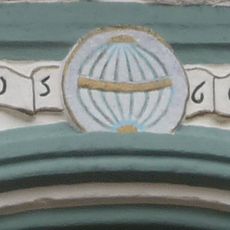
The coat of arms carved above the main entrance represents the families Hacke and Sturmfeder, whose alliance shaped the building's character and ownership. These family symbols remind visitors of the local nobility who left their mark on the place.
The building now houses a forest research institute and can be viewed from the outside to see how historic structures are repurposed. Visitors should know this is an active workplace where some areas may not be open to the public.
The house received the first lightning conductor in the Palatinate region in 1776, installed by physicist Johann Jakob Hemmer, a pioneer of electrical technology. This early innovation shows the building attracted scientific attention long before its modern research mission.
The community of curious travelers
AroundUs brings together thousands of curated places, local tips, and hidden gems, enriched daily by 91,893 contributors worldwide.