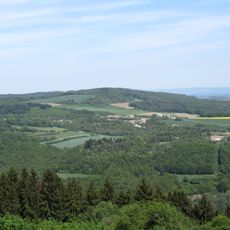
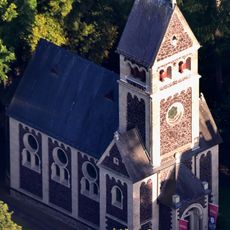
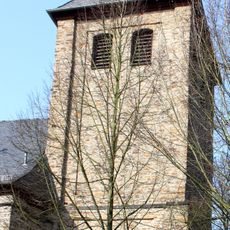
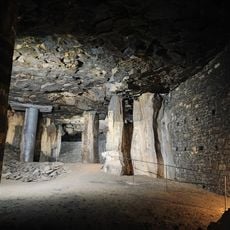
Veitskopf, Mountain summit in Rhineland-Palatinate, Germany.
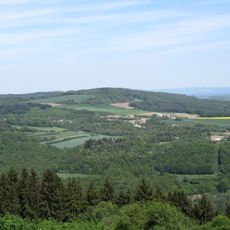
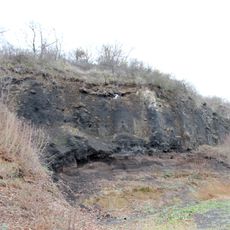
Veitskopf is a mountain summit rising 428 meters above sea level in the Eifel region, marked by distinct volcanic rock formations across its slopes. The terrain displays clear traces of ancient lava flows that created the layered structure visible to anyone walking across the peak.
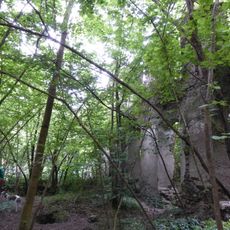
The Veitskopf is the cinder cone of a volcano that erupted during the Quaternary; without reference strata its age cannot be precisely dated. Three lava flows originated from it. The first and largest ran north from the western crater rim and, because the Gleeser Tal formed only after the eruption, now stands above the valley as the Mauerley. The two smaller southern flows were detected by magnetic surveys beneath a pumice layer.
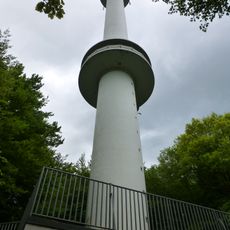
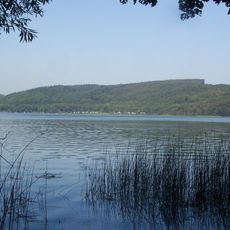
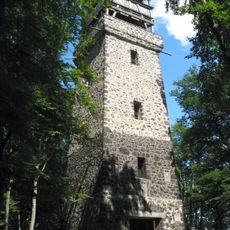
The name Veitskopf refers to Saint Vitus (Veit), though the sources record no legend explaining the dedication. What visitors can see today is the volcanic legacy: the Mauerley, the lava flow that stands above the Gleeser Tal because the valley formed only after the eruption. The Lydia Tower on the southeastern spur above the L 113 serves as a lookout over the Laacher See and the Brohltal.
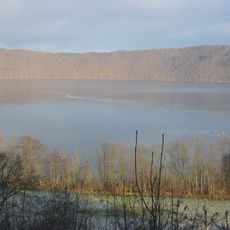
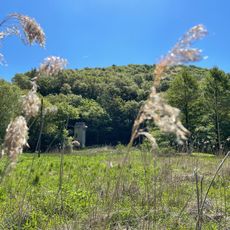
The Lydia Tower stands on a spur east-southeast of the summit, above the L 113 road, and is reached on foot from there; the summit itself lies north of the Laacher See near Wassenach. The tower gives an all-round view over the lake, the Brohltal valley and as far as the Siebengebirge.
The Lydia Tower stands not on the summit itself but on a spur east-southeast of the Veitskopf, above the L 113 road. From it the view takes in the Laacher See, the Brohltal valley and the Siebengebirge hills.
The community of curious travelers
AroundUs brings together thousands of curated places, local tips, and hidden gems, enriched daily by 93,757 contributors worldwide.