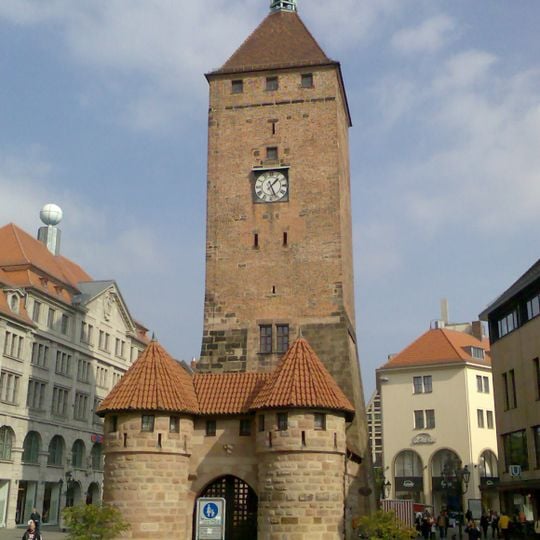
Weißer Turm, Medieval tower in Nuremberg, Germany
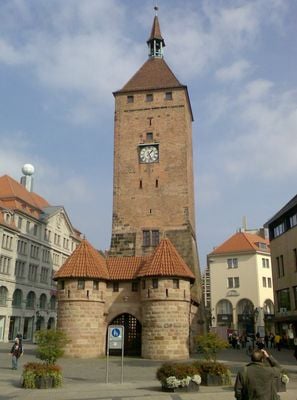
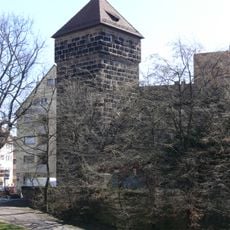
The White Tower is a fortification tower from Nuremberg's medieval defensive walls, built with thick stone and featuring Gothic architectural elements. The structure displays typical defensive features of a city fortress, with robust construction and a straightforward design created to protect the settlement.
The tower was probably built around 1250 as part of the Inner Spittlertor, named after the neighbouring Elisabethspital, and it also served as a toll station. It was one of the few towers of its era to survive in Nuremberg, alongside the Laufer Schlagturm and the Schuldturm. After the imperial city passed to Bavaria, a planned demolition was stopped by the resistance of Nuremberg's citizens.
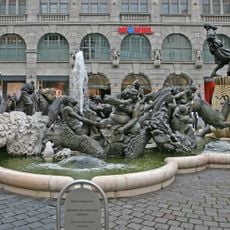
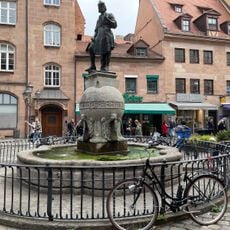
The name comes from the white plaster that once covered the brickwork; it was removed during post-war renovation, leaving the bare brick and sandstone seen today. The tower was originally part of the Inner Spittlertor, named after the neighbouring Elisabethspital. East of the tower stands the Hans-Sachs-Brunnen, which Nurembergers call the Ehekarussell (marriage carousel).
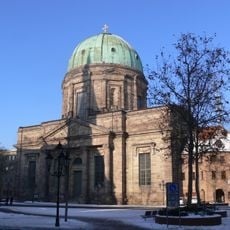
The tower stands on Ludwigsplatz at the western end of the Karolinenstraße and Breite Gasse pedestrian zone, opposite the former Teutonic Order churches of St. Jakob and St. Elisabeth. Since 1978 an escalator inside the pointed-arch gateway leads down to the eastern entrance of the Weißer Turm U-Bahn station. The Hans-Sachs-Brunnen fountain lies just to the east.
The tower was originally part of the Inner Spittlertor, named after the neighbouring Elisabethspital. Like the Laufer Schlagturm it carries a striking clock that announced the complex Nuremberg hour within a citywide network of chime clocks. Since the 1978 subway construction, an escalator inside the gate passage leads down to the Weißer Turm station.
The community of curious travelers
AroundUs brings together thousands of curated places, local tips, and hidden gems, enriched daily by 93,598 contributors worldwide.