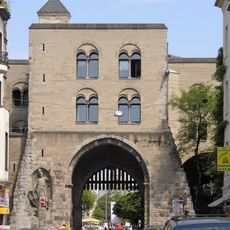
Weckschnapp, Defensive tower in Cologne, Germany
The Weckschnapp is a tower from Cologne's medieval fortification system, positioned at the border between the Altstadt-Nord and Neustadt-Nord districts. Its stone walls clearly show how the structure once monitored the river and protected the city's perimeter.
The Weckschnapp was built in the Middle Ages as a defensive fortification to protect the city on the Rhine from attacks. It was part of a larger network of towers that together formed Cologne's defensive line.
The name Weckschnapp comes from a Cologne legend first written down in 1826 by Ernst Weyden, who noted it as oral tradition. It tells of a bread (Weck) hung from the ceiling of a prison cell; prisoners jumped for it and fell through a trapdoor into a blade-lined shaft leading to the Rhine. The tale was transferred to this tower by popular usage in the 19th century.
The tower is easy to find between the two districts, as it sits prominently along the Rhine riverside promenade. The location is accessible on foot and viewable from multiple angles.
The name comes from a Cologne legend first written down in 1826 by Ernst Weyden: guards hung a Weck (small bread) from the ceiling of the tower's prison, and starving prisoners who jumped to snap it fell through a trapdoor into a blade-lined shaft leading to the Rhine. One emaciated prisoner escaped by slipping between the blades. The surviving tower never stood by the Rhine and was never a prison; the tale probably belongs to a Rhine fortification destroyed in the 1784 flood.
The community of curious travelers
AroundUs brings together thousands of curated places, local tips, and hidden gems, enriched daily by 94,227 contributors worldwide.