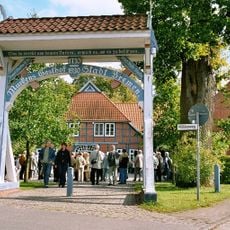
Kloster Lilienthal, 13th-century religious complex in Lilienthal, Germany
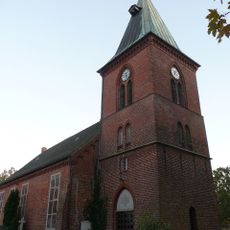
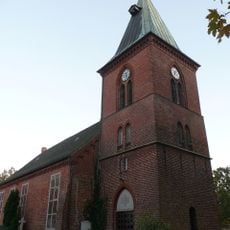
Kloster Lilienthal is a former Cistercian convent with a single-nave brick church marked by a steep gable and cross vaults spanning five interior bays. The preserved medieval structures display typical features of brick architecture from this era.
Archbishop Gerhard II of Bremen founded the Cistercian convent in 1232 as a memorial to his brother Hermann zur Lippe who died in battle. During the Reformation, the monastery became Protestant in 1552 and has served as an Evangelical parish church ever since.
The monastery served as a spiritual center for the region for centuries before undergoing religious shifts. Today, the building and its use reflect this layered past between Catholic origins and Protestant transformation.
The building now functions as an Evangelical parish church and can be visited during services or by prior arrangement. The preserved medieval elements require careful handling, so visitors should respect the church's guidelines.
Inside the church stands a Baroque pulpit altar from 1738, a rare combination of two liturgical elements in one structure. A gravestone of Abbess Gertrud Scheene from the 14th century is also preserved there, offering a personal connection to the monastery's past.
The community of curious travelers
AroundUs brings together thousands of curated places, local tips, and hidden gems, enriched daily by 91,262 contributors worldwide.