Waldstadion, Athletic stadium in Steinebrück, Germany
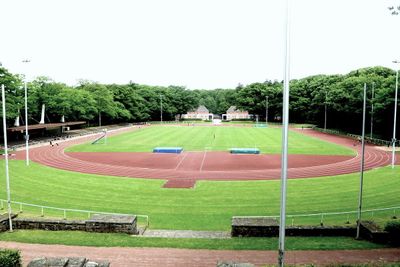
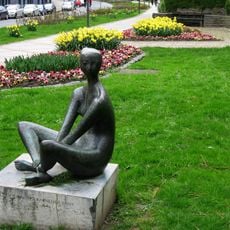
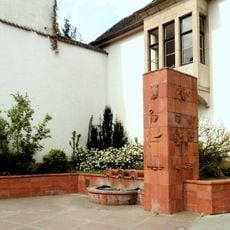
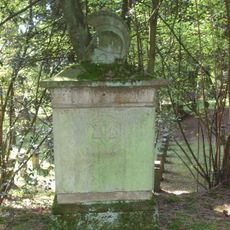
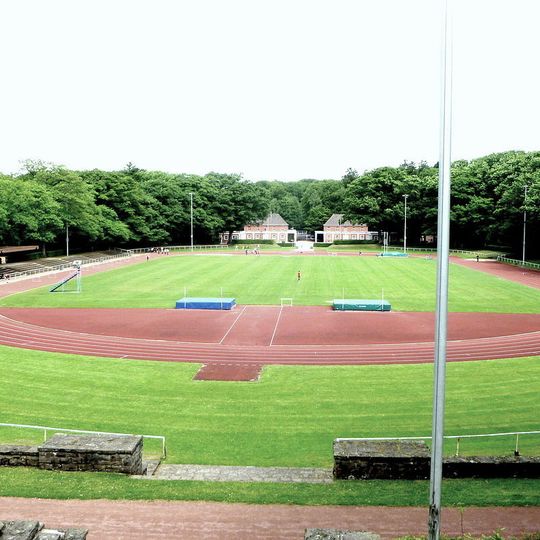
Waldstadion is a municipal sports ground in Aachen-Steinebrück with a main pitch, a secondary pitch and a six-lane running track; the straight along the 1,200-seat grandstand, 400 of them covered, is used for sprints up to the 110-metre hurdles. The main stadium holds more than 10,000 standing places and has floodlights. A memorial stone designed by Ewald Mies, brother of Ludwig Mies van der Rohe, stands on the grounds.
The facility was built in 1927 to replace a simple forest grounds previously used for athletic activities. It received architectural heritage monument status in 1980 in recognition of its importance as a rare example of sports architecture from that period.
The stadium is named after the surrounding forest area and serves as a central venue where local athletes and training groups gather for regional competitions. It shapes the character of the neighborhood and shows how sports have been woven into daily life here over many decades.
Parking is limited because of the villa-style housing around the grounds, so for major events out-of-town visitors should use car parks farther away. The city opens the floodlit tracks to non-club athletes on Mondays and Fridays from 18:00 to 20:00 between October and March.
On the forecourt stands a small Hochbunker, a raised above-ground bunker built around 1941/42 for Aachen's population; it still exists but is not open to the public. It is a different structure from the stadium itself, which was listed as a monument on 11 March 1980.
The community of curious travelers
AroundUs brings together thousands of curated places, local tips, and hidden gems, enriched daily by 92,701 contributors worldwide.