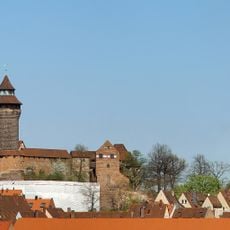
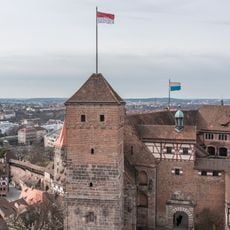
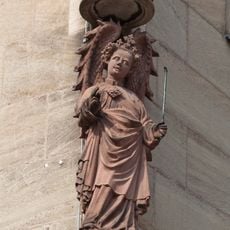
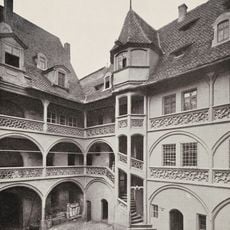
Burggrafenburg, Medieval castle within Nuremberg Castle complex, Germany.
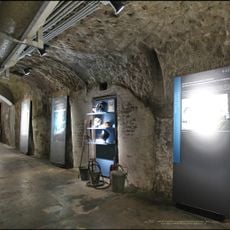
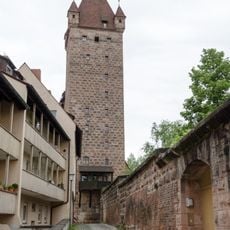
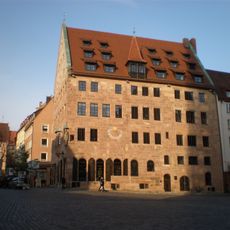
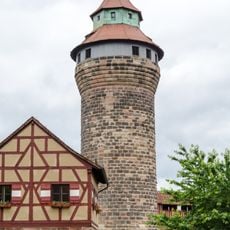
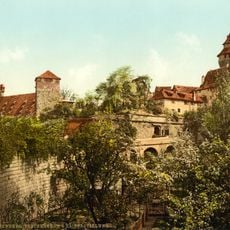
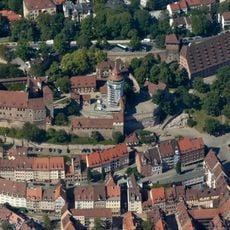
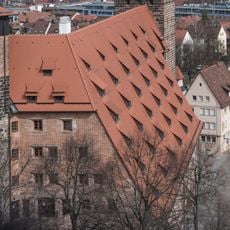
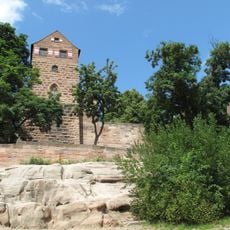
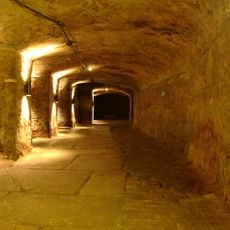
The Burggrafenburg is the oldest, eastern part of Nuremberg Castle, a separate castle area on the sandstone ridge north of the old town. Its surviving structures are the pentagonal Fünfeckturm, the Burgamtmannshaus with Salian-era core, and remains of the old Vestnertor, all on the north side facing the city moat. A sunken path between the Walburgiskapelle and the tower is lined with rubble from the central complex destroyed in 1420.
The castle was probably built on the site of a castrum mentioned after 1050 and was held as a fief by the Lords of Raabs. When the male line of the Counts of Raabs died out in 1191, Frederick I of Hohenzollern inherited it and took over the office of burgrave around 1192. In 1420 a night raid led by Christoph Leininger, the Wittelsbach bailiff of Lauf, captured and burned the castle; the Hohenzollerns never rebuilt it and sold the site to Nuremberg in 1427.
The name comes from the burgraves, imperial officials enfeoffed with the castle; the Counts of Raabs held it from 1050, and the Hohenzollerns took over around 1192. After the Hohenzollerns moved their residence to Cadolzburg around 1260, a Burgamtmann managed the site. The ruined northern part, sold to Nuremberg in 1427, still bears the title Burggrafenburg.
It is best to visit the castle during daytime, when natural light illuminates the stone walls and interior areas well. Sturdy footwear is recommended, as many paths are uneven and include stairs and ramps.
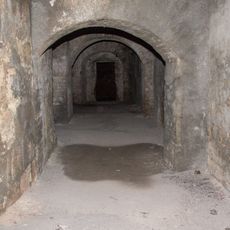
The hollow way between the Walburgiskapelle and the Fünfeckturm is lined on both sides with rubble from the central complex destroyed in 1420. The castle was never rebuilt after that night raid, so the site preserves a single moment of destruction rather than centuries of rebuilding.
The community of curious travelers
AroundUs brings together thousands of curated places, local tips, and hidden gems, enriched daily by 94,124 contributors worldwide.