Schloss Kirchberg, Historical château in Immenstaad am Bodensee, Germany
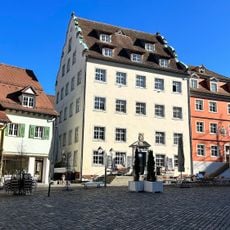
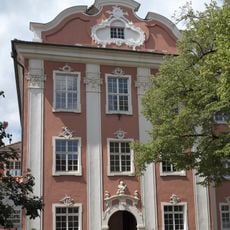
Schloss Kirchberg is a complex of buildings in the vineyards about 25 metres above Lake Constance, made up of parts from different construction phases. The Altes Schloss, a three-storey block built 1546–1549, possibly incorporates a medieval residential tower. The east wing was added 1755–1775 by Salem architect Johann Joachim Scholl, and the Hofmeister building dates from 1604.
A fortified farmstead of the Counts Otto and Hartmann of Kirchberg, with a chapel giving the site its name, probably stood here in the Middle Ages. In 1288 the estate passed via Kempten Abbey to Salem Cistercian Abbey, which farmed it with lay brothers, mainly for wine. It stayed with Salem until secularisation in 1802, then went to the Margrave of Baden, who continued viticulture.
The name Kirchberg comes from a chapel of the counts Otto and Hartmann von Kirchberg that once stood here. Cistercian lay brothers from Salem farmed the estate, and wine has been grown on the surrounding land ever since. The chapel was rebuilt in 1501 with three altars and refitted in Baroque style by Joseph Anton Feuchtmayer between 1739 and 1742.
The castle stands 25 metres above Lake Constance amid vineyards, and the buildings are now privately owned flats, so interiors are not open to visitors. The chapel, rebuilt in 1501 and given its Baroque form by Joseph Anton Feuchtmayer between 1739 and 1742, was demolished in the 19th century for a house chapel. The outer grounds can be viewed from the surrounding vineyard paths.
The chapel at the core of the estate was rebuilt in 1501 with three altars and refitted in Baroque style between 1739 and 1742 by Joseph Anton Feuchtmayer; the 19th century replaced it with a house chapel. The estate's wine, grown on the surrounding slopes, was the main product of the Salem monks' farm.
The community of curious travelers
AroundUs brings together thousands of curated places, local tips, and hidden gems, enriched daily by 92,885 contributors worldwide.