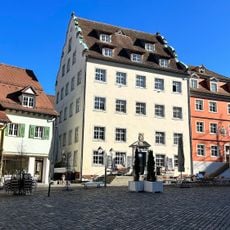
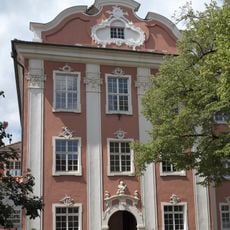
Fürstenhäusle, Historical museum in Meersburg, Germany.
The Fürstenhäusle is a residential building in Meersburg that now functions as a museum and sits on a hillside overlooking Lake Constance. The structure preserves the rooms and furnishings as they were, allowing visitors to see how the spaces were organized and arranged during that period.
Jakob Fugger, canon of Constance and later Prince-Bishop, had the house built around 1600 as a garden and vineyard house. It stayed in the hands of the Prince-Bishops for 200 years, passed to Baden in 1803, and stood empty for decades. In November 1843 Annette von Droste-Hülshoff bought it at auction for 400 Taler; she died in 1848 without ever living there. Her descendants opened the museum in 1923.
The rooms reflect how a privileged literary figure lived during the 1800s, with furnishings and daily objects showing the lifestyle of that era. Walking through the spaces reveals the rhythms and habits of a writer's household from that time.
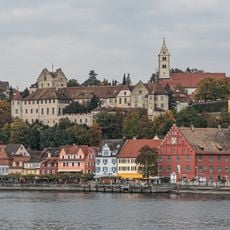
The house stands a few steps above the Obertor gate, in a vineyard on the hillside above Meersburg's old town. The wing added by Carl Caspar von Droste zu Hülshoff now serves as the visitor centre, while the front part keeps the museum rooms. The museum is managed by Staatliche Schlösser und Gärten Baden-Württemberg.
The poet's great-great-grandfather Heinrich-Wilhelm I. von Droste zu Hülshoff killed a Count Fugger in a duel on St. Peter's Square in Rome after a quarrel over a forgotten toast; the Fuggers later built this house. Droste-Hülshoff called her upstairs workroom, with its view of Lake Constance, her "swallow's nest".
The community of curious travelers
AroundUs brings together thousands of curated places, local tips, and hidden gems, enriched daily by 94,639 contributors worldwide.