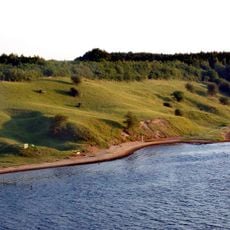
Archäologisch-naturkundlicher Wanderweg Lübeck, Archaeological nature trail in Lübeck, Germany.
The Archäologisch-naturkundlicher Wanderweg Lübeck is a 5.5 km hiking trail established in 1995 in the Waldhusener Forst, northeast of Lübeck. Its 21 stations, marked by panels from the Office for Archaeological Heritage Conservation and the City Forestry Office, present finds from the Neolithic to the early post-war years, including the Pöppendorfer Ringwall and the Großsteingrab Steinhusen.
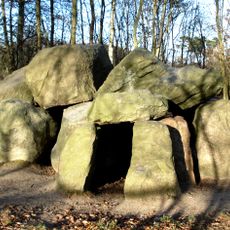
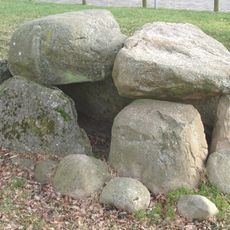
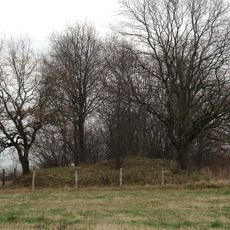
The trail was laid out in 1995 with 21 stations covering the period from the Neolithic to the first years after the Second World War. It passes the Pöppendorfer Ringwall, the Großsteingrab Steinhusen (about 5,500 years old, its mound removed in an 1843 excavation), nine Bronze Age burial mounds on the Herrenberg, and the foundations of the Pöppendorf camp, which housed up to 5,000 people in 150 barracks between 1945 and 1951. Maintenance was suspended for cost reasons and resumed after a December 2018 decision of the Lübeck cultural committee.
The trail displays boundary stones from 1804 that marked the border between the Free Hanseatic City of Lübeck and the Grand Duchy of Oldenburg. These markers show how the city once protected its independence and territorial limits.
The route has multiple entry points and clear signage throughout, making it easy to navigate and find your way. Information panels at various stops are maintained regularly and provide explanations that enhance your visit as you walk.
The trail also passes the Pöppendorf Manor Moor, an Ice Age depression where peat extraction took place until 1925. This activity left traces that are still visible today in how the ground is shaped.
The community of curious travelers
AroundUs brings together thousands of curated places, local tips, and hidden gems, enriched daily by 93,134 contributors worldwide.