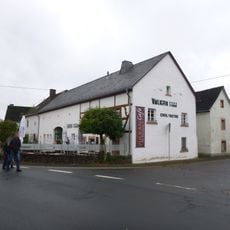
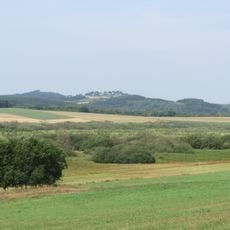
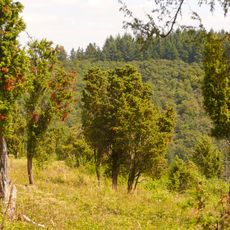
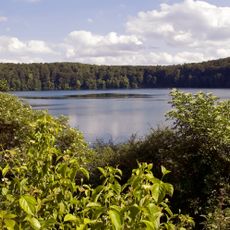
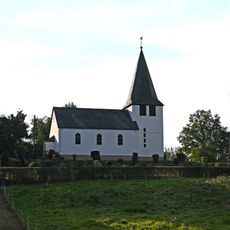
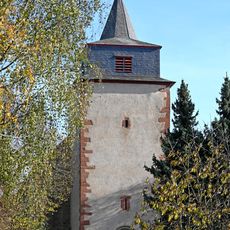
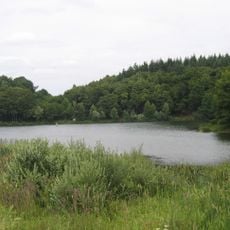
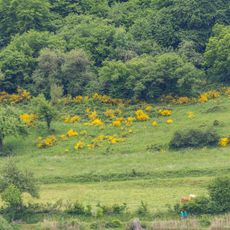
Eckfelder Maar, Paleontological excavation site in Rhineland-Palatinate, Germany.
Eckfelder Maar is a former volcanic crater that now functions as an excavation site stretching roughly 500 meters across. The terrain has stepped pathways and access routes that resemble a small quarry, with visible layers of rock formations clearly exposed in the walls.
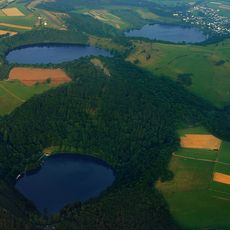
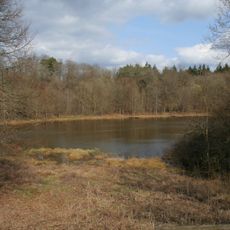
Volcanic eruptions roughly 44 million years ago created a crater about 1000 meters across, which gradually transformed into a lake. The water body reached depths between 110 and 150 meters, shaping the landscape for an extended period.
The site takes its name from an ancient lake that formed within a volcanic crater. Visitors can explore fossils in the nearby museum and learn how life appeared in this region millions of years ago.
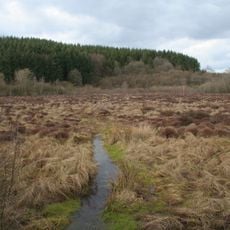
The excavation site lies on the eastern side of the Lieser, roughly two kilometres northwest of Eckfeld and southwest of Manderscheid, at 320 to 395 metres above sea level. The terrain is uneven and partly overgrown, so sturdy footwear helps. The site is a research dig, not a visitor centre; check opening arrangements with the local tourist office in Manderscheid before setting out.
The Eckfelder Maar is considered the oldest known maar, formed about 44.3 million years ago. Its finely laminated sediments, averaging less than 5 cm thick, have yielded at least 30,000 macrofossils, enabling detailed reconstruction of the Middle Eocene landscape.
The community of curious travelers
AroundUs brings together thousands of curated places, local tips, and hidden gems, enriched daily by 93,366 contributors worldwide.