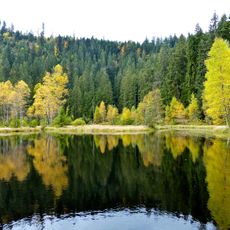
Schwedenschanze, Archaeological fortification site in Bad Peterstal-Griesbach, Germany.
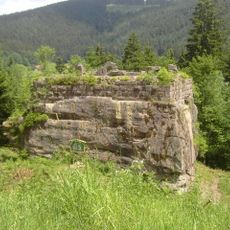
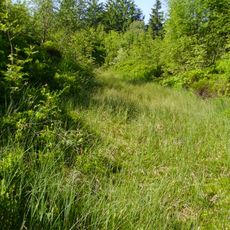
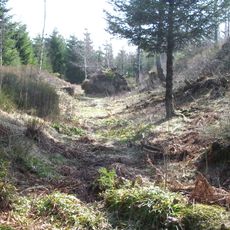
Schwedenschanze is an earthwork redoubt on the Oppenauer Steige consisting of a rampart with a surrounding ditch and four corner bastions whose faces meet at nearly 90 degrees. The main rampart measures 41 metres, each bastion flank 9 metres and each face 21 metres; the rampart stands about 2 metres high inside and roughly 3 metres from the ditch bottom to the crest.
A Württemberg field camp was documented here in 1593, when Duke Frederick, residing in Montbéliard, stationed soldiers during the Strasbourg Bishops' War. The earthwork itself was built in 1632/1633, in the Thirty Years' War, for 400 to 500 men. A 1674 map by Stäbenhaber already labels it largely decayed. Swedish troops are not proven to have been here.
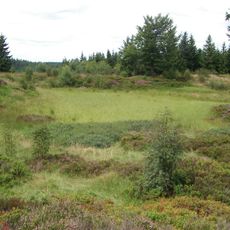
The name Schwedenschanze ('Swedish redoubt') follows a naming habit shared by many redoubts of the Thirty Years' War, yet Swedish troops are not documented here. The site is a protected Bodendenkmal under Baden-Württemberg's heritage law, and its four corner bastions, with faces meeting at nearly 90 degrees, remain visible in the terrain.
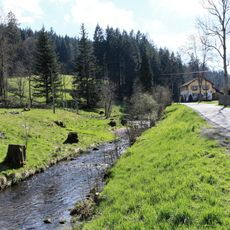
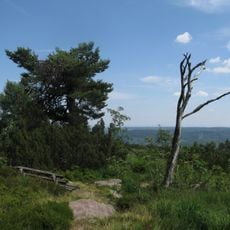
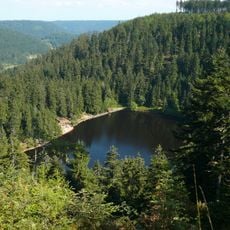
The site sits on a mountain and can be reached via hiking trails that lead up from the valley below. The best time to visit is from spring through fall, when paths are clear of snow and weather conditions are generally stable.
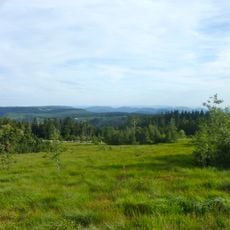
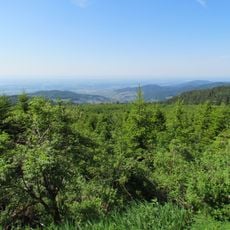
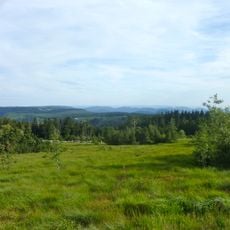
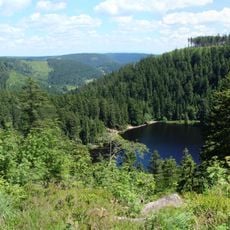
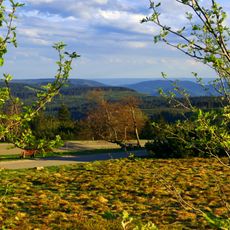
The fortification sits at an elevation of about 970 meters and offers wide views across the surrounding mountains from that vantage point. From this position, guards could once monitor large areas and spot movement on the mountain passes at an early stage.
The community of curious travelers
AroundUs brings together thousands of curated places, local tips, and hidden gems, enriched daily by 92,736 contributors worldwide.