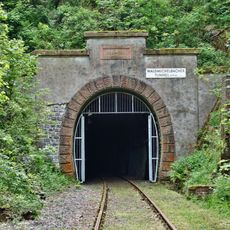
Grube Ludwig, Mine museum with adit in Wald-Michelbach, Germany
Grube Ludwig is a former mine with walkable tunnels in Wald-Michelbach, in the Odenwald region of Germany. The site was used to extract manganese and iron ores embedded in layers of limestone and dolomite rock.
Mining at Grube Ludwig ran from 1889 to 1918, when pyrolusite, psilomelane and wad bound in Zechstein dolomite were extracted through four shafts and two tunnels. The Siegen firm Hesse und Schulte worked the mine from 1889 to 1893, and the Siegener Eisenindustrie AG from 1901 to 1918. Why it closed in 1918 is unknown; in World War II the tunnels served as air-raid shelters, and Stollen I opened to visitors on 12 February 1993.
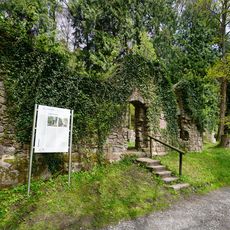
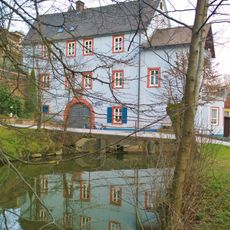
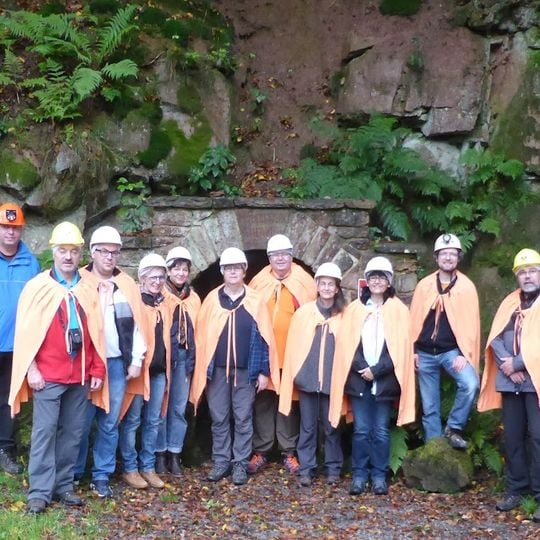
The mine is named after Ludwig, following the common practice of naming mines after people. The surviving adit, Stollen I, was opened to visitors on 12 February 1993; about 85 of its 110 metres can be walked, and the mine receives roughly 1,200 visitors a year. The Zechenhaus built around 1893 housed the mining office and lodged miners who came from elsewhere; it is now privately owned.
Stollen I is the only accessible adit; about 85 of its 110 metres can be walked. The passage is 1.7 to 2 metres high and stays at 8 to 11 °C inside, so a jacket is useful even in summer. The mine draws roughly 1,200 visitors a year.
The mine was the smallest in the Ludwig mining field. After closing in 1918, it served as an air-raid shelter in World War II, then as a storage for potatoes and apple wine, and later as a rubbish dump until the entrances were sealed.
The community of curious travelers
AroundUs brings together thousands of curated places, local tips, and hidden gems, enriched daily by 92,697 contributors worldwide.