Rheinbacher Burg, Medieval castle ruins in Rheinbach, Germany.
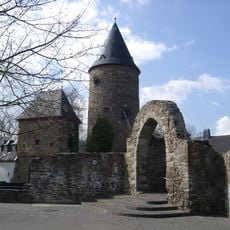
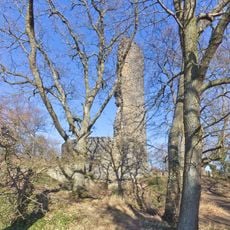
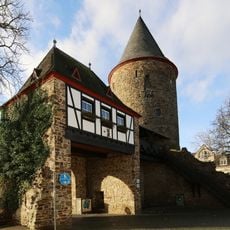
Rheinbacher Burg consists of water castle remains featuring a defensive tower, residential palace, gatehouse, and wall sections that were once surrounded by a moat system. The site displays the typical layout of a medieval fortress with distinct functional areas for living and defense.
The castle's keep, now called Hexenturm, was dated by dendrochronology to about 1180; the knights of Rheinbach built it beside the Aachen–Frankfurt road. In the mid-13th century the archbishops of Cologne acquired Rheinbach and made the castle the seat of the Amt Rheinbach. Troops of William of Orange partially destroyed town and castle in 1673; major parts were demolished between 1780 and 1830, and the city bought the site in 1913.
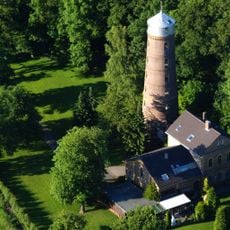
The tower name Hexenturm comes from folk legends that developed centuries after the structure was built, though it served purely as a defensive feature at its origin. Visitors can see how the thick walls were constructed using techniques that shaped medieval German castles across the region.
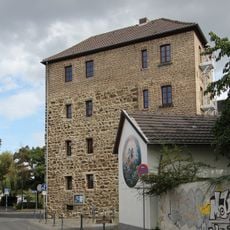
The main castle area lies at the southeast edge of Rheinbach's old town, with the gate, the Hexenturm keep, a gate arch and parts of the ring wall and moat still visible. The site was restored in 1980 and the moats partly re-established in 1988. A primary school now stands on the former outer bailey; its half-tower survives beside the schoolyard.
The gatehouse, called "Orgel", was built around 1200 partly from sawn blocks of cast masonry taken from the demolished Roman aqueduct. The keep, today called Hexenturm, was dated by dendrochronology to about 1180, which fixes the castle's origin in the second half of the 12th century.
The community of curious travelers
AroundUs brings together thousands of curated places, local tips, and hidden gems, enriched daily by 93,007 contributors worldwide.