Stadtmuseum Weimar, Municipal museum in Weimar, Germany
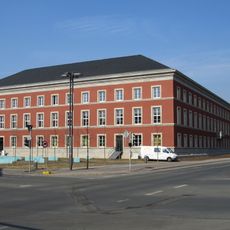
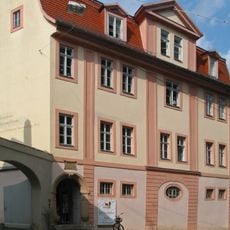
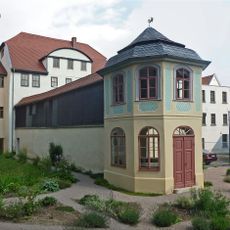
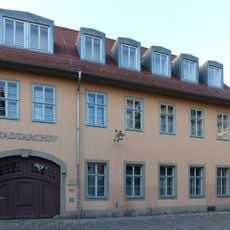
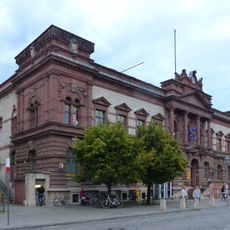
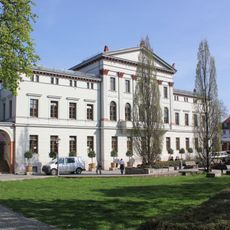
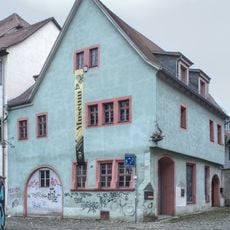
The Stadtmuseum Weimar occupies the Bertuchhaus at Karl-Liebknecht-Straße 5, a classicist house built in two stages: Johann Friedrich Rudolph Steiner erected the north wing in 1780–1782 for publisher Friedrich Justin Bertuch, and Johann Christian Heinrich Schlüter designed the central section in 1799–1803 for the Landes-Industrie-Comptoir and Geographisches Institut. The museum has used the building since 1955.
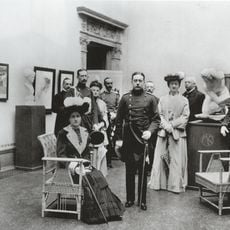
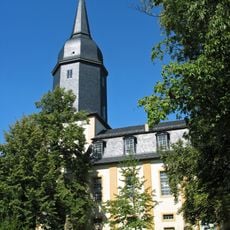
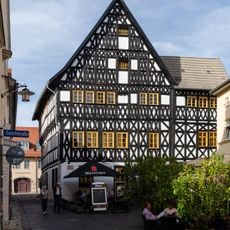
Founded on 24 June 1889 as a natural science museum under the Natural Science Society, it occupied four rooms of the school behind the town church. In 1892 lack of space forced a move to the Poseck house, now the Museum of Pre- and Early History of Thuringia. Taken over by the city administration in 1903, it became the first municipal museum in Thuringia; since 1955 it has been housed in the Bertuch house.
The museum keeps the larger part of the artistic estate of the painter Alfred Ahner, and its textile collection is of supra-regional importance. Friedrich Schiller, in a letter to Christian Gottfried Körner, called the Bertuch house the most beautiful in all of Weimar and left a detailed appraisal of the building and its garden.
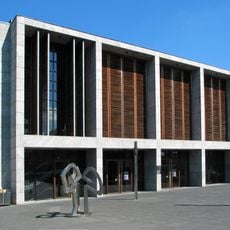
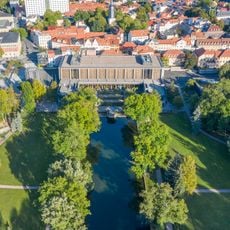
The museum sits at Karl-Liebknecht-Straße 5, near the main station and the Neues Museum, with the Weimarhallenpark behind the building. It was closed to visitors from 2000 to 2005. The Kunsthalle "Harry Graf Kessler" at Goetheplatz 9b and the Bienenmuseum are run through the Stadtmuseum.
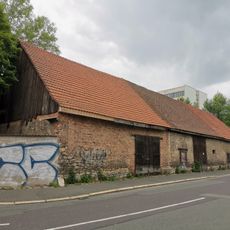
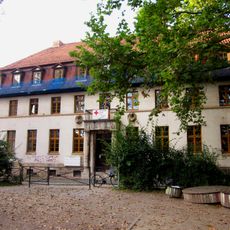
The workshops behind the Bertuchhaus once formed a four-sided courtyard; Christiane Vulpius, Goethe's wife, was among those who worked there. They were demolished in 1928 to make way for the Weimarhalle. The museum also holds most of the artistic estate of painter Alfred Ahner and a textile collection of supra-regional importance.
The community of curious travelers
AroundUs brings together thousands of curated places, local tips, and hidden gems, enriched daily by 94,084 contributors worldwide.