Kunsthalle Harry Graf Kessler, Art exhibition hall at Goetheplatz, Weimar, Germany
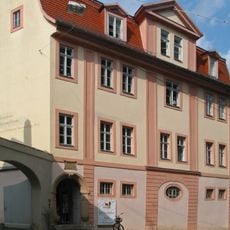
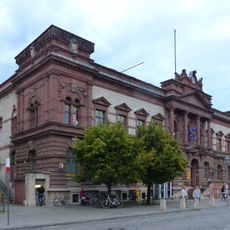
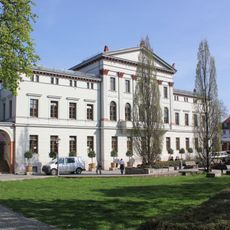
Kunsthalle Harry Graf Kessler is an exhibition hall built in 1880 in the Venetian Renaissance style, reached through a corridor off Goetheplatz into an inner courtyard. Its tall rectangular doorway has a carved stone surround with a decorated lintel above two jambs; framed pictures hang beside it and a bust stands on a dark plinth. Changing exhibitions are held inside.
Harry Graf Kessler was a patron, writer and diplomat who helped build a lively art scene in Weimar around the turn of the 20th century and forged wide connections across Europe. The exhibition space carries his name in recognition of that role.
The name honours Harry Graf Kessler, the patron and innovator behind the house, though the driving force in realising it was Aimé von Palézieux-Falconnet, director of the Weimar art collections and Kessler's rival. A memorial plaque to Kessler is mounted in the building. Since 2006 the Stadtmuseum has run the hall for the city administration, and changing exhibitions are held in the courtyard reached through a corridor.
The space is in the center of Weimar and easy to reach on foot from most points in the old town. Since the building has several floors, visitors with mobility difficulties may want to check accessibility before arriving.
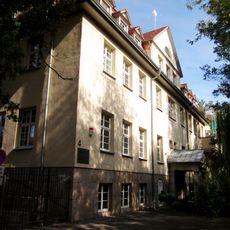
The hall opened in 1880 on the site of a former brickyard, and the first major show was a Max Klinger exhibition in 1903, recorded by court photographer Louis Held. A building added at Goetheplatz 9 in the 1930s blocked the view of the entrance; visitors reach the hall through a corridor into the courtyard. A memorial plaque honours Kessler.
The community of curious travelers
AroundUs brings together thousands of curated places, local tips, and hidden gems, enriched daily by 94,020 contributors worldwide.