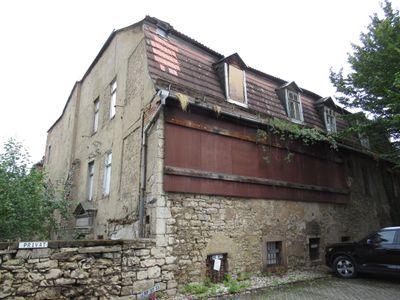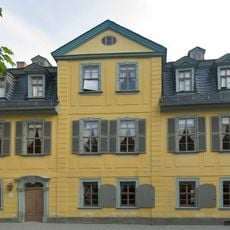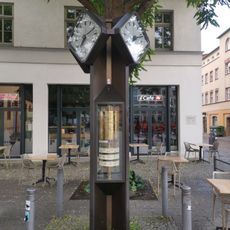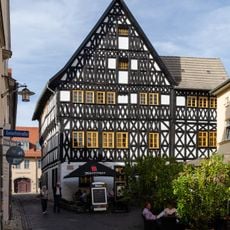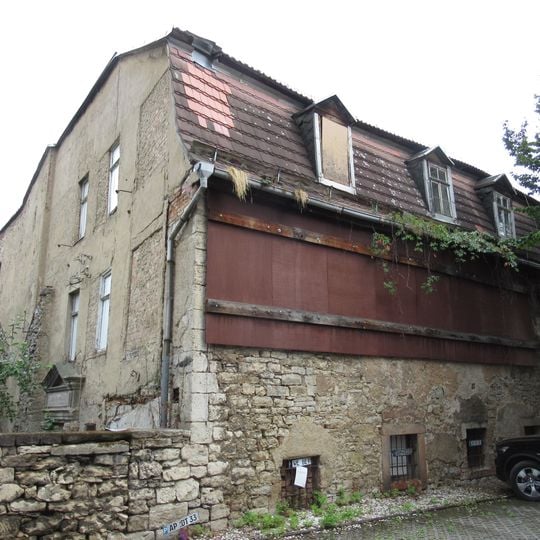
Zucht- und Waisenhaus, Heritage monument in Böttchergasse, Weimar, Germany
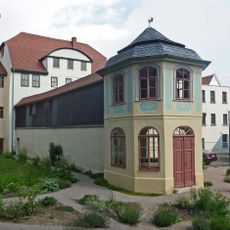
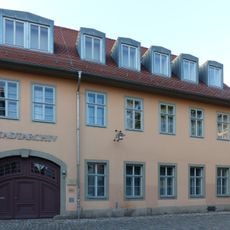
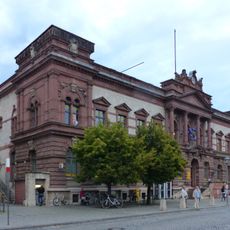
The Zucht- und Waisenhaus is a neoclassical structure in central Weimar on Böttchergasse, featuring a disciplined facade with symmetrically arranged windows across multiple stories. The building displays the formal proportions and clean lines typical of early 18th-century architectural design.
The building was constructed in 1713 by architect Christian Richter under Duke Wilhelm Ernst's commission and originally served as both a correctional facility and orphanage. It stands today as the sole survivor from its original neighborhood, having endured through World War II when surrounding structures were destroyed.
The building takes its name from its original dual purpose and reflects how Weimar organized both discipline and care for vulnerable people in the early modern period. Walking past it today, you see a structure that was central to the city's identity as a place of order and social responsibility.
The structure sits in Weimar's old town and is easy to reach on foot while exploring the city center. The location on a quiet lane offers a sense of the district's historical layout and neighboring buildings from the same period.
When built in 1713, the structure came with a 30-year tax exemption to encourage people to settle in Weimar and support economic growth. This incentive also attracted a Huguenot community that lived in the area until 1717 before moving on.
The community of curious travelers
AroundUs brings together thousands of curated places, local tips, and hidden gems, enriched daily by 60,000 contributors worldwide.