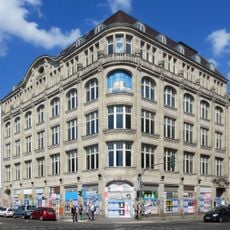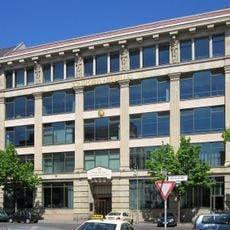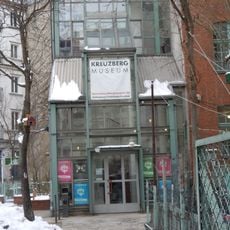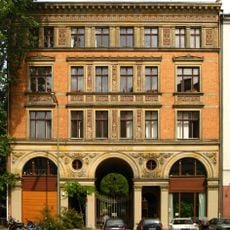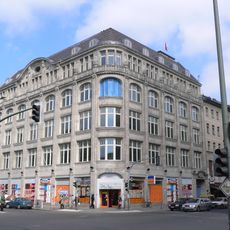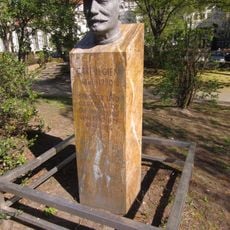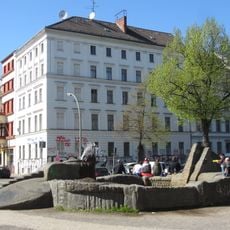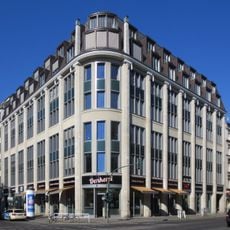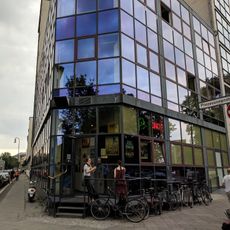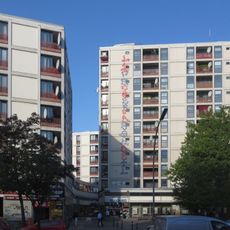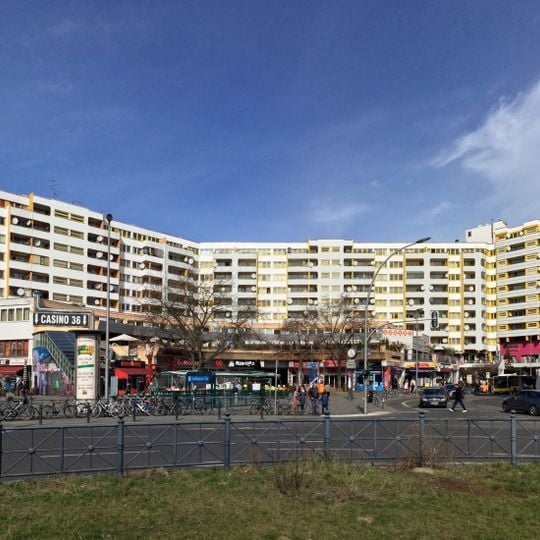
Zentrum Kreuzberg, Modern residential complex in Kreuzberg, Germany.
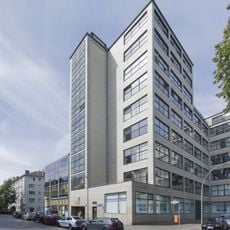
Zentrum Kreuzberg is a twelve-storey residential block with 367 flats, built 1969–1974 to designs by Werner Jokisch and Johannes Uhl. Its long facade forms a slight angle toward Kottbusser Tor, and a two- to three-storey quarter-circle annex with around 15,000 m² of commercial space fronts the junction. The block spans Adalbertstraße and Dresdner Straße, the latter reachable only through a narrow pedestrian passage.
Built 1969–1974 to plans by Werner Jokisch and Johannes Uhl, the block was financed by West German private investors through the Schmidt & Press GmbH & Co. KG, founded in 1968, which gained tax breaks under the Berlinförderungsgesetz. The developers' eviction methods provoked protests, and the 1971 Rauch-Haus-Song by Ton Steine Scherben demanded that Schmidt, Press and Mosch leave Kreuzberg.
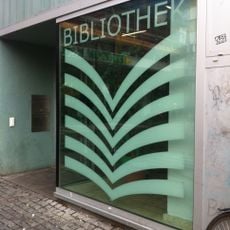
The building's name changed from Neues Kreuzberger Zentrum to Zentrum Kreuzberg in 2000. Its ground-level arcade houses bars, restaurants, a cinema and the district library, and the Rauch-Haus-Song by Ton Steine Scherben, first played in late 1971, names its developers Schmidt, Press and Mosch in the refrain.
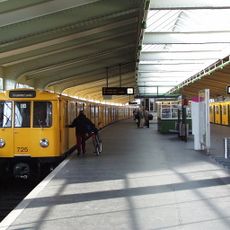
The complex straddles Adalbertstraße and Dresdner Straße; Dresdner Straße is reached only through a narrow pedestrian passage under the block. The U-Bahnhof Kottbusser Tor, served by two U-Bahn lines, and several BVG bus lines stop directly at the square. The former multi-storey car park behind the building was converted into a kindergarten.
The block bridges two streets that historically met at the square: the Adalbertstraße and the Dresdner Straße, which today can only be reached through a narrow pedestrian passage. The semicircular complex was meant to shield the square from a planned urban motorway ring that was never built.
The community of curious travelers
AroundUs brings together thousands of curated places, local tips, and hidden gems, enriched daily by 94,586 contributors worldwide.