Gustav-Adolf-Kirche, Lutheran church in Ramersdorf, Germany
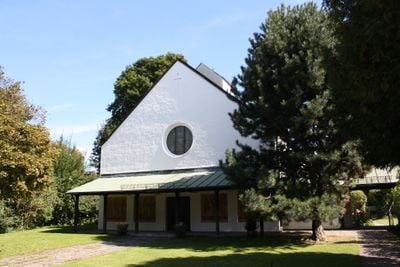
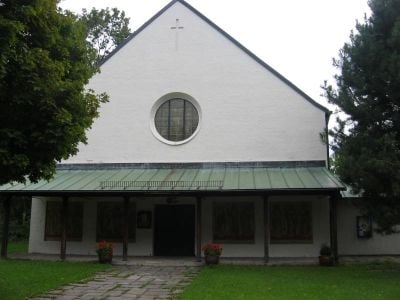
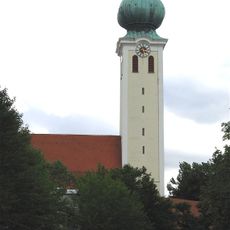
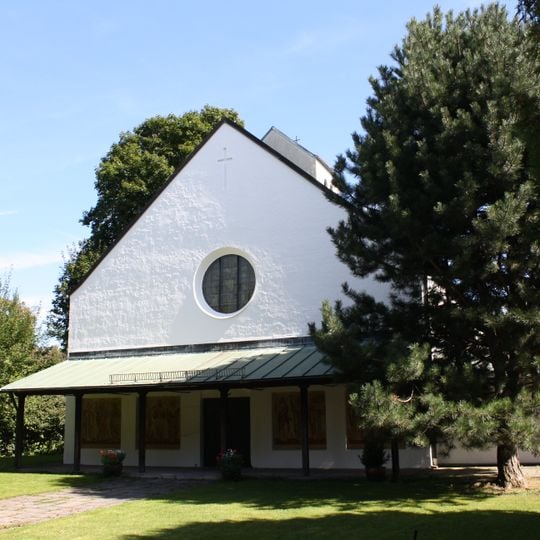
The Gustav-Adolf-Kirche is a white-plastered Lutheran church in Ramersdorf, Munich, with a 13 by 23 metre nave and a steep 46-degree gable roof. A tower with a 6 by 6 metre base and 16-metre eaves height is set into the northeast corner. The west front has a round window designed by the architect's daughter, and a green metal canopy shelters the entrance.
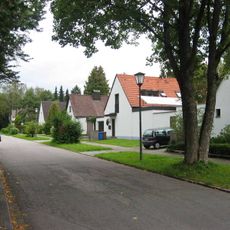
Protestants in eastern Munich sought their own parish from 1931. The city's 1934 model settlement in Ramersdorf, planned by Guido Harbers, gave the church its site; the cornerstone was laid on 18 November 1934 and the church was consecrated on 1 September 1935. The building itself was little damaged in the Second World War, but the rectory was destroyed on 31 July 1944 and rebuilt in 1951.
The church is named after Gustav Adolf II of Sweden, who fell at the Battle of Lützen in 1632. The four frescoes under the canopy beside the entrance show figures in antique dress with halos, modelled on the twelve apostles, but their attributes are ambiguous, so they cannot all be identified. The round window in the west front was designed by Harbers' daughter.
The church sits in southeast Munich and is accessible by public transit, hosting regular services and community programs throughout the week. Visitors should note that access is available during events and the building functions as an active parish center.
The round window in the west facade was designed by the architect's daughter. The four frescoes under the porch, three figures each, show apostles with attributes that are deliberately ambiguous, so they cannot be clearly identified. The frescoes were made by artists Schilling and Günther Graßmann.
The community of curious travelers
AroundUs brings together thousands of curated places, local tips, and hidden gems, enriched daily by 92,883 contributors worldwide.