Beatae Mariae Virginis, Protestant church in Hornburg, Germany
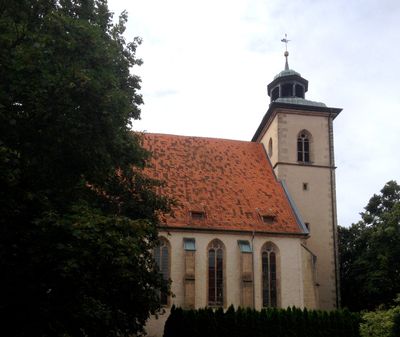
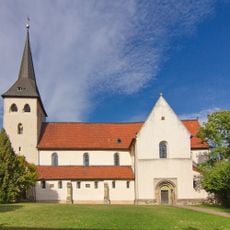
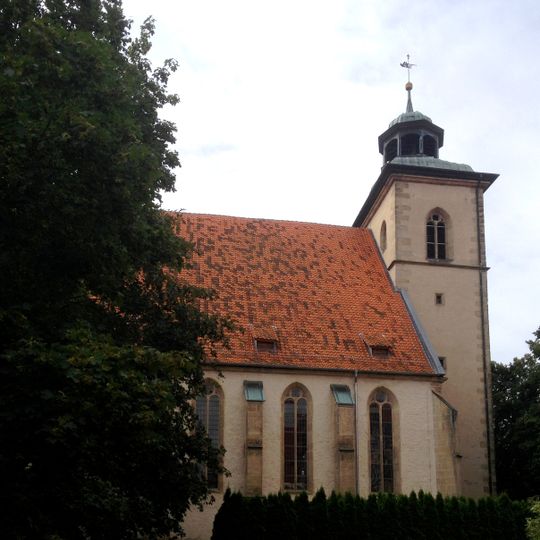
Beatae Mariae Virginis is a Protestant church building in Hornburg featuring Gothic elements such as polygonal pillars and vaulted arches. The interior contains a Renaissance pulpit, galleries, and a decorated baptismal font.
Built in 1614–16 by master mason Martin Eilenburg on the foundations of a medieval predecessor, possibly with a 1613 design by Paul Francke. The west tower core is medieval, its upper storey dated 1616 by iron anchors. The design follows St. Stephani in Osterwieck and late Gothic forms used in Wolfenbüttel and Bückeburg.
The church is still used by the Hornburg/Isingerode parish of the Evangelical Lutheran Church in Brunswick. Its name, Beatae Mariae Virginis, refers to the Virgin Mary, and the 1616 pulpit shows Moses as its supporting figure, with reliefs of the Brazen Serpent and the Mount of Olives.
The church stands in the Hornburg district of Schladen-Werla, with the tower and its octagonal lantern visible from the surrounding streets. The south side has two late Gothic pointed-arch portals from the 16th century; the western one carries tracery. The north side has two portals with tooth-cut friezes and diamond and pearl mouldings. The nave's slender buttresses were added in the 19th century, while the corner buttresses are original.
The nine-part organ case and its gallery on palm-shaped supports were carved in 1707 by Hornburg joiner Jürgen Froböse, not Georg. The case first held an organ by Christoph Cuntzius; the present pneumatic instrument, with 25 stops on two manuals and pedal, was built by Carl Johann Heinrich Röver in 1894 and survives in altered form.
The community of curious travelers
AroundUs brings together thousands of curated places, local tips, and hidden gems, enriched daily by 92,689 contributors worldwide.