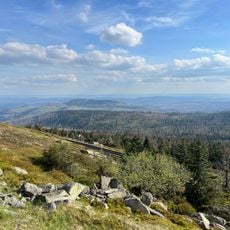
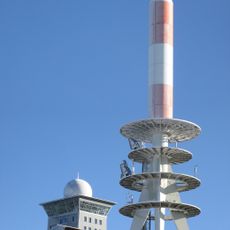
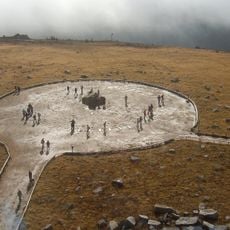
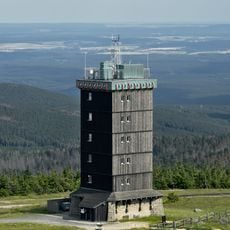
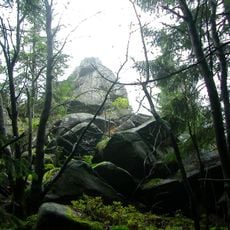
Teufelskanzel, Rock formation on Brocken mountain, Harz District, Germany
Teufelskanzel is a granite rock outcrop on Brocken mountain that juts prominently from the slopes like a natural pulpit. Its dark stone mass stands out against the surrounding terrain and serves as a distinctive landmark along popular hiking paths.
The rock formation first gained attention through literary works in the late 1700s and became known through writers of the Romantic period. Its association with ancient regional legends drew interest from artists and poets seeking inspiration.
The names Teufelskanzel and neighbouring Hexenaltar date from the late 17th century, when tourism on the Brocken was growing, and both are tied to the Walpurgis Night legends of 30 April to 1 May. One tale tells of the devil preaching to Brocken visitors from this rock; in the 18th century people believed an idol had once stood on it.
The Teufelskanzel lies in the strictly protected core zone of Harz National Park and has no paths, so it cannot be visited; it is clearly visible from the Brocken summit. The neighbouring Hexenaltar is a similar granite formation, and the Hexenwaschbecken once stood near the Brockenuhr.
The names Teufelskanzel and Hexenaltar date only from the late 17th century, when tourism on the Brocken was growing, and both are tied to the Walpurgis Night legends of 30 April to 1 May. In the 18th century people still believed an idol had once stood on the rock. Goethe, recalling his winter 1777 visit, noted that he stood beside the Teufelskanzel.
The community of curious travelers
AroundUs brings together thousands of curated places, local tips, and hidden gems, enriched daily by 92,722 contributors worldwide.